It must have been 1958 when I came to Hatsudai in Shibuya, having accepted Master Tezuka Osamu’s invitation to work as a manga assistant right after graduating from the architecture department of my high school in Shibata, Niigata. Less than two years later, around 1960, Toei Animation approached my master about adapting his manga “Boku no Son Goku” (published by Akita Shoten) into an animated film. And so, quite unexpectedly, I found myself dispatched to Toei Animation as Master Tezuka’s representative, commuting to their studio near Oizumi-Gakuen Station.
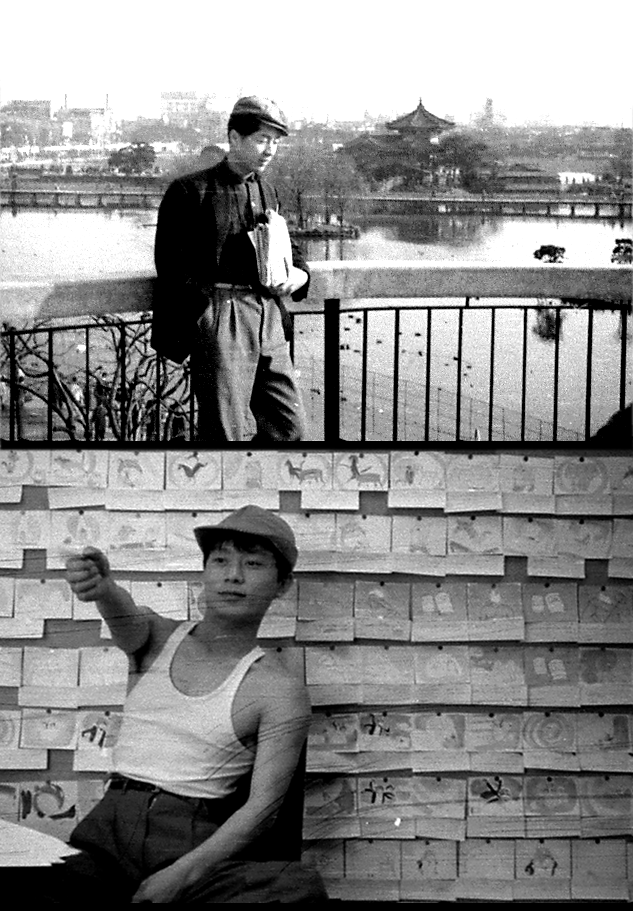
My family ran a movie theater back home, so I had grown up watching plenty of films. Animation in particular I watched without fail. In those days, before every feature film, they always screened one newsreel (one reel, about eight minutes) and one American animated short (also one reel, about eight minutes) as a bonus. I would skip movies that didn’t interest me, but I never missed the cartoons. Back then, Disney shorts were surprisingly scarce – it was mostly Warner Bros. productions.
Whenever Master Tezuka and I talked about animation, it was a delight to discover we were perfectly in sync on every title. When someone once asked us what our favorite animated feature was, I immediately named the French film “Le Roi et l’Oiseau” (“The King and the Mockingbird”). But it seemed my master hadn’t seen it. When I mentioned I had watched it three times, he replied, “Well, I’ve seen Disney’s Snow White forty times.” Perhaps it was exchanges like these that led to me, a junior, being chosen over my seniors for the assignment at Toei Animation.
In the Toei Animation “Saiyuki” (Journey to the West) staff room, I was mostly on my own doing the storyboard work. Storyboards – also called director’s continuity – are normally drawn by the director, but at Toei most directors couldn’t draw, so storyboard artists were typically picked from among the animation staff.
It seems the storyboards for Toei Animation’s debut feature “Hakujaden” (The Tale of the White Serpent) were drawn by Daikuhara Akira, the chief animator. He also did the storyboards for the third film, “The Boy Sarutobi Sasuke.” For some reason, storyboard artists were never credited in the titles, so even the animation staff themselves often had no idea who had drawn them. “Hakujaden” was my favorite among all Toei Animation’s works, so I badly wanted to know who had done its storyboards. I asked several of the chiefs, but none of them knew. In the end, Otsuka-san and I deduced through process of elimination that it must have been Daikuhara-san. It’s a shame we never confirmed this with the man himself, but Daikuhara-san had an air of solitary distinction about him that made him somewhat unapproachable.
Then one day, during the lunch break, when most people had not yet returned to their desks, I was at mine working on something when Daikuhara-san silently drifted over and said, “Tsukioka-kun, do you want this?” He dropped a paper bag on my desk and walked away. It was so sudden, so without preamble, that all I managed was a bewildered “Uh – thank you very much,” half-assuming it was some used animation drawings or the like. Lunch ended, staff began filtering back to their seats, other meetings came up, and it was probably two hours before I finally opened that package. When I did, I was stunned: inside were the original storyboards from “Hakujaden” and four original design sketches of Bai-Niang, the white snake heroine. Daikuhara-san had two veteran seconds working under him and led a large group on par with Mori Yasuji’s – so why he chose to give something so precious to me, a person of no fixed standing within any group, remained a mystery for the rest of my days.
Years later, when I became a visiting professor at the China Academy of Art, I donated those original drawings and storyboards to the university, along with eight cels from the Bugs Bunny series that Chuck Jones had given me. When a commemorative exhibition was held to mark the occasion, Bai-Niang’s design sketches were blown up into enormous posters – three meters tall and two meters wide – and displayed in several locations around campus. I was quite moved. The homeland of “Hakujaden” is Hangzhou, after all, and Bai-Niang had come home. I even went to see the stone well where the White Snake is said to have lived. Naturally, the lady herself was not in attendance.
The Storyboards for “Saiyuki”

For the “Saiyuki” storyboards, the first draft was drawn by Master Tezuka himself. The second draft was split evenly between Ishinomori Shotaro and me. The third draft and the final version were done by me alone.
Master Tezuka’s role was not merely to adapt the story of his manga “Boku no Son Goku” – it was to restructure the original Journey to the West tale and oversee the entire “Saiyuki” production as a co-director alongside Yabushita Taiji. This meant I was to devote myself fully to the animated film until its completion.
Master Tezuka was a consummate idea man, constantly pitching new proposals, whereas Yabushita, the co-director, never made any demands at all. Apparently, the one who lodged the most objections was me. The addition of a character called Xiao Long was one point of contention, but the biggest fights were over giving the Monkey King a love interest named Rin-Rin, and having the Ox Demon King fall into the crater of the Mountain of Flames. My reasoning was simple: the original “Journey to the West” is Asia’s great fantasy bible, and you shouldn’t clutter it up or alter it with unnecessary additions. I was like some conservative old man guarding the canon.
Master Tezuka then said, “Well then, let’s have Rin-Rin, who waited for the Monkey King’s return, die.” “That’s exactly the kind of thing that makes it complicated, sensei,” I protested. And from the Toei side: “Death is absolutely not allowed in animation.” Back and forth it went, and as the storyboard artist, I was on the losing end every time.
As a postscript, it was Carl Jung who proposed the theory that “defeating the enemy in a dream or story and being united with the heroine (marriage) is the paradigm of growth.” In the case of this “Saiyuki,” at least, there is a possibility that Master Tezuka was following that very paradigm.
Initially, I was supposed to leave the Toei studio once the storyboards were finished, but even after animation production began, I ended up staying on. At the time, I was living in an apartment near Shinjuku, having moved from Hatsudai, so on my way home from Toei it became my daily routine to stop by my master’s combined residence and office first. Dinner was often eaten out with the other assistants who worked at Hatsudai – and sometimes Master Tezuka himself joined us.
The Animation Department – Next to Fukiya Koji
When my work shifted from storyboards to actual animation, my desk was moved into the animation production department. There were about sixty staff members in animation, with animation directors assigned to each project. For “Saiyuki,” these were Mori Yasuji and Daikuhara Akira, both of equal rank. From outside, Kumakawa Masao and Furusawa Hideo – formerly of Nihon Doga (Japan Animation) – joined, along with Otsuka Yasuo as a newly promoted key animator. Under each chief were five seconds, and under them, teams of five to eight animators.
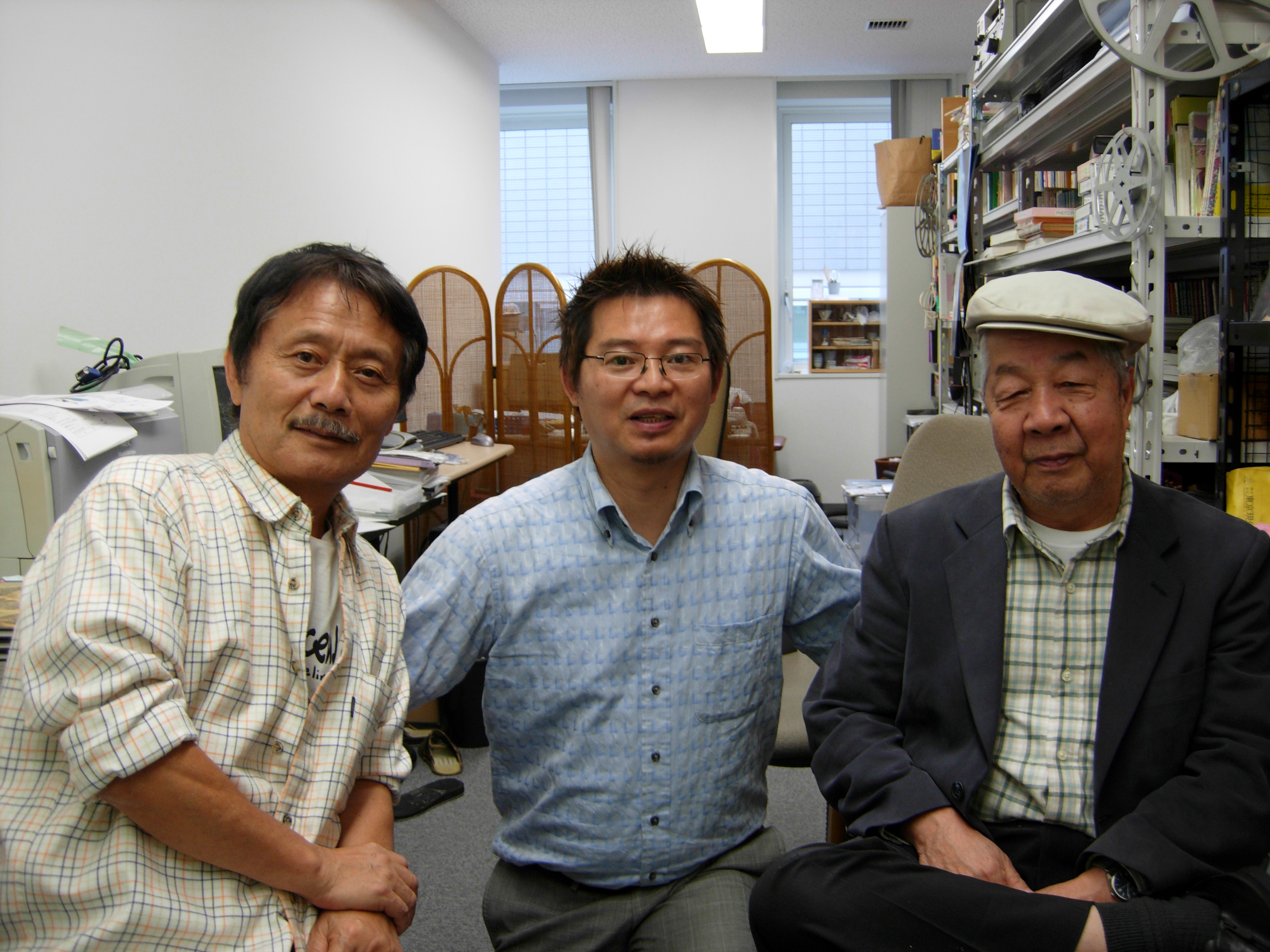
As my master’s representative, my role was to attend meetings with Shirakawa-san, one of co-director Yabushita’s assistants, whenever directorial issues arose, and relay matters to my master.
Co-director Yabushita also served as the personnel manager of the animation department, so his desk was positioned to overlook the entire staff. Mine was one of two desks set up in the farthest corner, well away from Yabushita-san. My neighbor was Fukiya Koji. Fukiya-san held the title of director and animator for “Yumemi Doji,” an earlier short film produced by Toei Animation. The film was stored somewhere in the studio, and since I could have watched it anytime if I reserved a screening room, I always meant to see it – but regrettably, the opportunity never came. I kept a number of his drawings and animation work at my desk, but the prettier colored pieces seem to have been spirited away by someone.
Fukiya-san was from Niigata, same as me, and I recall him asking about Niigata every time he came in. But I wasn’t the type to go home often, and I was sorely lacking in material for hometown conversation. In later years, a kind of “Lolicon” trend emerged in the anime industry, eventually evolving into the broader “cute girl” boom. I once studied this phenomenon as a genealogy of beauty in Japanese painting. When you trace the lineage, the name that appears prominently in the modern era is none other than Fukiya Koji. The line runs from the female figures in the Takamatsuzuka tomb murals through Yamato-e, the ukiyo-e masters Harunobu and Utamaro, then into the Meiji, Taisho, and Showa periods with Okamoto Shinsou, Takehisa Yumeji, Nakahara Jun’ichi, Fukiya Koji, Kaburaki Kiyokata, and onward to Lum from “Urusei Yatsura,” the warrior maiden Sailor Moon, and Hatsune Miku. Fukiya-san was a vital link in that chain.
The lyrical song “Hanayome Ningyo” (The Bridal Doll), which opens with the words “kinran donsu” and has recently been heard as background music in commercials, was written by Fukiya-san. He was widely known as a lyrical painter as well.
Kumakawa-san had been the chief animator on that masterpiece “Kumo to Tulip” (The Spider and the Tulip, 1943, directed by Masaoka Kenzo), and Furusawa-san was an active manga artist known for his witty dialogue.
Among the key animators at that time was Otsuka Yasuo, a young man who had just been promoted to chief. He was a first-generation veteran of Toei Animation, and “Saiyuki” was his first project as a key animation chief. He used to drop by the “Saiyuki” staff room often to hang out, making him one of my longest-standing friends from my Toei Animation days. Another close friend was Oda Katsuya – known to everyone as “Odakatsu” or “Odakatchan.” Odakatchan was an insatiable movie buff, especially devoted to American films and above all to director John Ford. Once he started talking cinema, there was no stopping him – and he later became a film critic. At Toei Animation, he served as Otsuka-san’s second.
About Otsuka Yasuo
The legends surrounding Otsuka-san are many, but let me set down two or three of them here. I first met Otsuka-san during the production of “Saiyuki,” and his famous claim that he had been a narcotics agent before entering the anime industry is well known. I heard it from the man himself.
The story went like this: when intelligence about a suspicious vessel came in from the Coast Guard to the Regional Narcotics Control Division, he would strap on a shoulder holster with a revolver and board the ship. It was basically the world of “The Untouchables,” Japanese edition. Hearing a story like that, you can’t help thinking – that’s incredible, that’s so cool – and you get drawn in by his storytelling. But it went beyond that; it inspired a certain reverence. I felt the same way.
Several years later, I was doing commercial work at a company outside of Toei. The producer there was a man named Kuriyama-san. When he learned I was affiliated with Toei Animation, he asked, “Do you have someone named Otsuka Yasuo at your company?” “Yes, he’s my senior colleague.” “Is he doing well?” “Just as well as I am.” “He used to work under me.” “So you mean the Untouchables thing – I mean, the narcotics agent business?” “What? He was certainly a customs clerk, but…” “So the shoulder holster with the revolver…” “It was nothing so glamorous. He wore black cotton arm covers on his sleeves and did desk work. He’d never even seen a revolver in that job. It was office work – clerical, you know?” Kuriyama-san said, laughing.
When I relayed this to Otsuka-san, he unusually offered no rebuttal and seemed to be trying to hide his embarrassed expression. But in later years, after moving to Tokyo Movie Shinsha, he apparently told the revolver stories there too, and the legend lived on at that company as well. Perhaps it had been Otsuka-san’s dream all along.
Otsuka-san and I went on several sketching outings together. The first was to Ueno Zoo to draw animals. After that, we made the rounds of the used bookstores in Kanda several times. In Kanda there were three shops specializing in Chinese books, and visiting all three was always Otsuka-san’s initiative. I bought piles of inexpensive editions of “Journey to the West,” “Romance of the Three Kingdoms,” and “Water Margin.” Later I even acquired the deluxe compiled editions in two volumes. The old Chinese illustrations had solid draftsmanship and backgrounds done in proper perspective. In later years, I also picked up at a Kanda bookshop a “Romance of the Three Kingdoms” published during the Meiji era, with illustrations by Katsushika Taitou (Hokusai also contributed illustrations). The compositional viewpoints were fascinating – foreground figures shown in bust shots, a kind of figure-perspective technique that felt very cinematic. By contrast, the Chinese editions all had fixed viewpoints, and you would never see anything like a bust-shot composition. I made several discoveries during our bookshop rounds, but my companion Otsuka-san showed little interest in art books or manga – he was always searching for text-heavy volumes. And despite going to Kanda five or six times, I only saw him actually buy a book once.
We would often spend an entire day on these outings, yet strangely, I have no memory of the two of us ever having a meal together. Neither of us ever brought up the subject of food. Looking back now, I wonder – were we never hungry? It’s a mystery.
The First Amusing Story
One day when I visited Otsuka-san’s apartment, I casually slid open the closet door – and what an avalanche! An absolute mountain of catalogues came sliding out. There was no stopping them, so I just waited until the cascade subsided. They were almost all from American manufacturers. Tanks, airplanes, and of course, weapons. They were printed on the finest coated paper with top-quality printing. Japan in the 1980s had its share of expensive-looking flyers too, but those were only for the priciest luxury goods – so these lavishly produced catalogues must have come from the leading defense industry companies. Even so, I was amazed that these giant manufacturers would send such costly catalogues to a single private individual upon request.
Otsuka-san’s passions shifted from guns to sailing ships, then to cars, tanks, and plastic models. If you said, “Otsuka-san, draw me an H&K VP9,” he could sketch one on the spot – he was that kind of expert, with an encyclopedic, trivia-loving streak.
That’s why I believe he was probably happiest when he was working on “Lupin III: The Castle of Cagliostro” at Tokyo Movie Shinsha. In later years, Otsuka-san even became a design consultant for Tamiya, the famous plastic model manufacturer. Incidentally, the recently deceased Tamiya president Tamiya Shunsaku’s older brother was Tamiya Takeshi, a former Toei Animation employee who directed “Wolf Boy Ken” and “Sally the Witch,” among others. I had the pleasure of spending time with him as well.
The Second Amusing Story
In those days, wooden apartment buildings didn’t come with a bath. Even Master Tezuka’s two-story rented house in Hatsudai – though my memory is a bit hazy – I believe did not have a bathtub. I’m not the type to go poking around in other people’s private spaces.
This would have been around the time of “Anju and Zushiomaru” at Toei. Otsuka-san and I were regular bathhouse-goers together. Occasionally Sugii Gisaburo would join us. Sugii-san and I were once comparing our chest hair with great pride when in walked a man with chest hair as magnificent as the sumo grand champion Asashio’s (famous for his impressive chest hair). We both fell silent immediately. On another occasion, Otsuka-san pulled over one of the small wooden stools at the bathhouse, sat on it in a particular way, placed his manhood upon it, wrung out a wet towel, and began smacking it – whap, whap.
“Otsuka-san, what on earth are you doing?” I asked.
“Forging,” he replied.
“Forging? What do you mean, forging?”
“You don’t know? Like forging steel – tanzo. You want to try it, Tsuki-san?”
“What for?”
An older man washing himself next to us burst out laughing. “You young fellows sure are working hard!”
“In preparation for the moment of truth,” said Otsuka-san.
“Do you do this regularly?”
“Now and then.”
Otsuka-san’s birthplace, Yamaguchi Prefecture, is said to be the birthplace of tatara iron smelting in Japan.
For what it’s worth, I went to the bathhouse with Master Tezuka a couple of times as well. When I told him this story about Otsuka-san, he laughed uproariously. Just so you know, Otsuka-san.
The Third Amusing Story
One day, I was unusually sitting quietly at my desk, absorbed in my work, when I heard someone striding toward me – clack, clack, clack – and then, WHAM! A tremendous blow to the back of my head. I spun around to find Otsuka-san standing over me like a guardian deity. “You talked, didn’t you – you bastard!”
“Oh dear, oh dear – sorry about that!” I said.
Here’s what had happened. Earlier that morning, around ten o’clock, Otsuka-san had appeared beside my desk looking unusually deflated.
“Tsuki-san, listen to this,” he said.
“What’s the matter? You look so down,” I replied.
“So about ten minutes ago, I was in one of the squat toilets finishing my business, and I realized there was no paper. I couldn’t very well call for help. So I steeled myself, pulled up my trousers just enough to hold them in place, and hopped out in a bunny-hop toward the next stall – only to have the door swing open and come face to face with the most beautiful woman in the entire Commercial Division. Our eyes met dead-on.”
“The embarrassment, the confusion – I just about lost it,” he said.
When I heard this, I found it so unbearably funny that I couldn’t stay in my chair. I tumbled to the floor and still couldn’t stop laughing. There is nothing more agonizing than a fit of laughter you cannot control. It was like being sentenced to death by laughter. Breathing happens in the lungs, but laughter, it seems, is all in the abdominal muscles. The pain was excruciating, and no matter how hard I tried to think about something else to stop it, nothing worked. Maybe once every three years I suffer through a laughing fit this severe, but with this particular story, the cramp in my gut came back every time I remembered it. How could anyone possibly keep such a hilarious tale to themselves? If I hadn’t told someone, it would have become my trauma instead. So I must have told someone – and within about three hours, every single person in the animation department knew.
I once wrote this story in a column somewhere, and it was even translated into Chinese. When I showed Otsuka-san the Chinese version, he had a puzzled look on his face, so perhaps the translation wasn’t entirely accurate. (Incidentally, Otsuka-san used to boast that while he couldn’t speak Chinese, he could read the written language.) Translating a story like this into a foreign language must be tremendously difficult. Then again, maybe with a story like this, a little inaccuracy is for the best.
(At the time, the Toei Animation building – like most office buildings – was designed primarily for male occupancy, with the assumption that women would hardly use the facilities. As a result, the restrooms were designed as unisex.)
Serikawa Yugo
Before coming to Toei Animation, Serikawa-san had been an assistant director at a company called Shintoho, where he worked on the famous “Tokaido Yotsuya Kaidan” (1956, directed by Nakagawa Nobuo). I was a fan of that film myself, so I felt a natural affinity for Serikawa-san.
After joining Toei Animation, his first real directorial assignment was “Anju and Zushiomaru.” However, his directorial style was very much top-down – issuing orders and driving the work forward in a commanding manner. It was easy to imagine this came from the live-action film studio culture. But this approach did not sit well with the proud members of the animation department.
On top of that, the project itself – “Anju and Zushiomaru” – was inherently difficult. There was so little scope for animation artistry that it was practically nonexistent. Before long, someone coined the label “kuso-realism” – “crap realism” – and it stuck.
If that’s the case, though, then far too many recent anime deserve that very same label, if I may be so blunt.
But to his credit, Serikawa-san learned from the experience of “Anju,” and by his next project, “Wanpaku Oji no Orochi Taiji” (The Little Prince and the Eight-Headed Dragon), he had become far more considerate toward his staff. I had felt a natural sympathy for him from the start, so I was always cooperative on the work front. And he in turn helped me out on “Wolf Boy Ken,” serving in what was essentially a sound director’s role – though at the time, neither the title nor the concept existed yet. I owe him a debt for that.
I’d like to write about “Wolf Boy Ken” next time.
On his final feature, “The Little Prince and the Eight-Headed Dragon,” I believe I contributed more footage than anyone else. My one dissatisfaction was with Susanoo’s infantile quality – his mother complex, essentially. I had raised objections about this to Serikawa-san from the very beginning of production, but since he was not the type who could write screenplays or draw storyboards himself, that aspect ended up somewhat underdeveloped.
On the other hand, Toei’s live-action division had the whole “mother film” genre – an entire series of them – and since they kept making sequels, they must have been box-office successes. And even in television anime, there was “Haha wo Tazunete Sanzenri” (3000 Leagues in Search of Mother, 1976, animation director Kotabe Yoichi, director Takahata Isao). That show was broadcast in Italy and so well received that Kotabe-san received a letter of commendation from the Italian Embassy.
Considering all this, it’s possible that Serikawa-san deliberately incorporated the motif of “motherhood” as an element to draw a certain audience.
Even so, whenever I hear Susanoo cry out “Okaasama!” – “Mother!” – I can’t help but get goosebumps.
Incidentally, the assistant director on both “Anju and Zushiomaru” and “The Little Prince and the Eight-Headed Dragon” was none other than Takahata Isao, and one of those influenced by his directorial methods was Miyazaki Hayao.
The Story of Kaguya-hime
Since Takahata-san’s name has come up, let me put down one more memory while it’s fresh.
This would have been around 1963, after “Arabian Nights: Sinbad’s Adventure” had wrapped up. One day, out of the blue, Mori Yasuji approached me. The live-action film director Uchida Tomu wanted to make an animated film and was looking for advice – could we introduce him to some animators? The request had come down from an executive, and Mori-san asked if I would come along to the meeting.
Mori-san and I went to the executive’s office. The executive wasn’t there, but Director Uchida was already waiting alone.
His proposal was that he wanted to make “Kaguya-hime” (The Tale of the Bamboo Cutter) as an animated film. Mori-san was enthusiastic. Since Uchida was a great director, we assumed he must have had some vision far beyond anything we could imagine. But he said his vision hadn’t taken shape yet, and that was precisely what he wanted to discuss.
So I ventured, “What if we made Kaguya-hime an alien?”
There was a pause. The director said, “Hmm, I see…” but the conversation didn’t go any further, and I wondered if I had said something terribly out of place.
Mori-san suggested circulating a questionnaire among all the animators to solicit ideas, and Director Uchida readily agreed.
Later, a notice went out to everyone, and about a dozen responses came in. They were printed up in script format – about ten copies – and distributed to the director and executives. But in the end, none of them seemed to match the director’s vision, and the project quietly faded away.
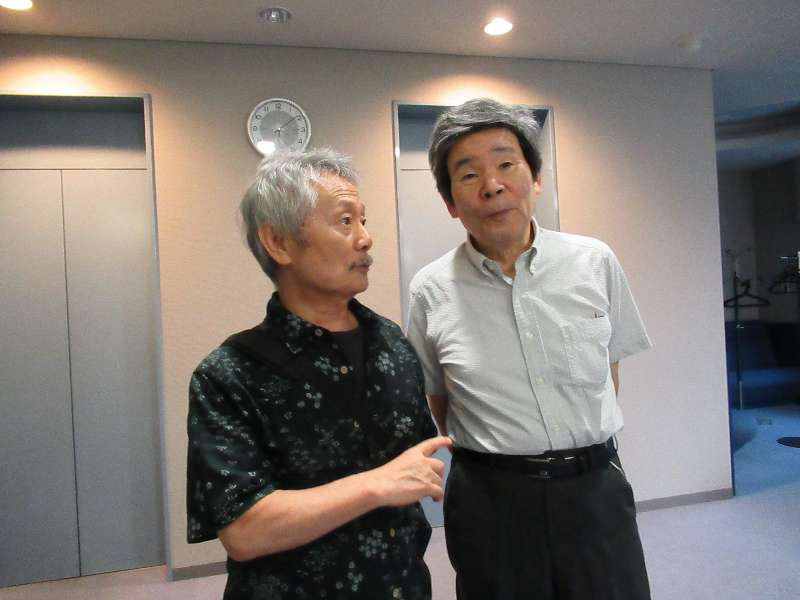
I never confirmed whether Takahata Isao had been among those who submitted ideas, but he must have been aware of the whole affair. Years later, when I heard that Takahata-san was going to make his own “Kaguya-hime,” I asked him about it.
He replied, somewhat indignantly, “There’s no copyright on the story, so anyone can make it, can’t they?”
“Hmm, I see…” I said.