Before I get into the story of Wolf Boy Ken, I want to say a few words about how I came to leave Master Tezuka’s studio and join Toei Animation.
The original plan was for me to return to my master’s side once production on Saiyuki was finished. But as the film neared completion, someone on the Toei Animation side — Mr. Shirakawa, an assistant director — asked whether I might consider staying on at Toei. I told him I wanted to keep doing animation, but my promise to my master came first, so it wasn’t possible.
At that time, Toei Animation had an internal rule requiring a university degree or higher for positions above the animation department — in the planning and directing divisions. After being hired into the animation department, new employees went through a six-month training period. I, however, had only a high school diploma. I’d never gone through the formal training program either. And yet, during production of Saiyuki, I had drawn key animation and in-betweens for fifteen cuts, all of which had been accepted as-is. Because of this, opinions came from both the directing and planning divisions that I should be hired as a special exception. Word was that even the personnel department and the executive managing director had already given their approval. After that, Mr. Shirakawa contacted my master’s manager, Mr. Imai Yoshiaki, to express Toei’s desire to recruit me. Mr. Imai flatly refused, saying I was the only person Master Tezuka had ever personally requested as an assistant. In the end, the matter was left to a direct conversation between my master and me.
“What do you want to do, Tsuki-san?” my master asked. I replied, “I do have an interest in trying animation.” He said, “The truth is, I want to do animation myself. If you promise to come back to me when I start making animation, then I’ll let you go to Toei.” Those were his generous words to me.
I had no complaints whatsoever about working for Master Tezuka. But animation was work done in color, and above all, the ability to create movement and work with music and sound — that held a powerful appeal.
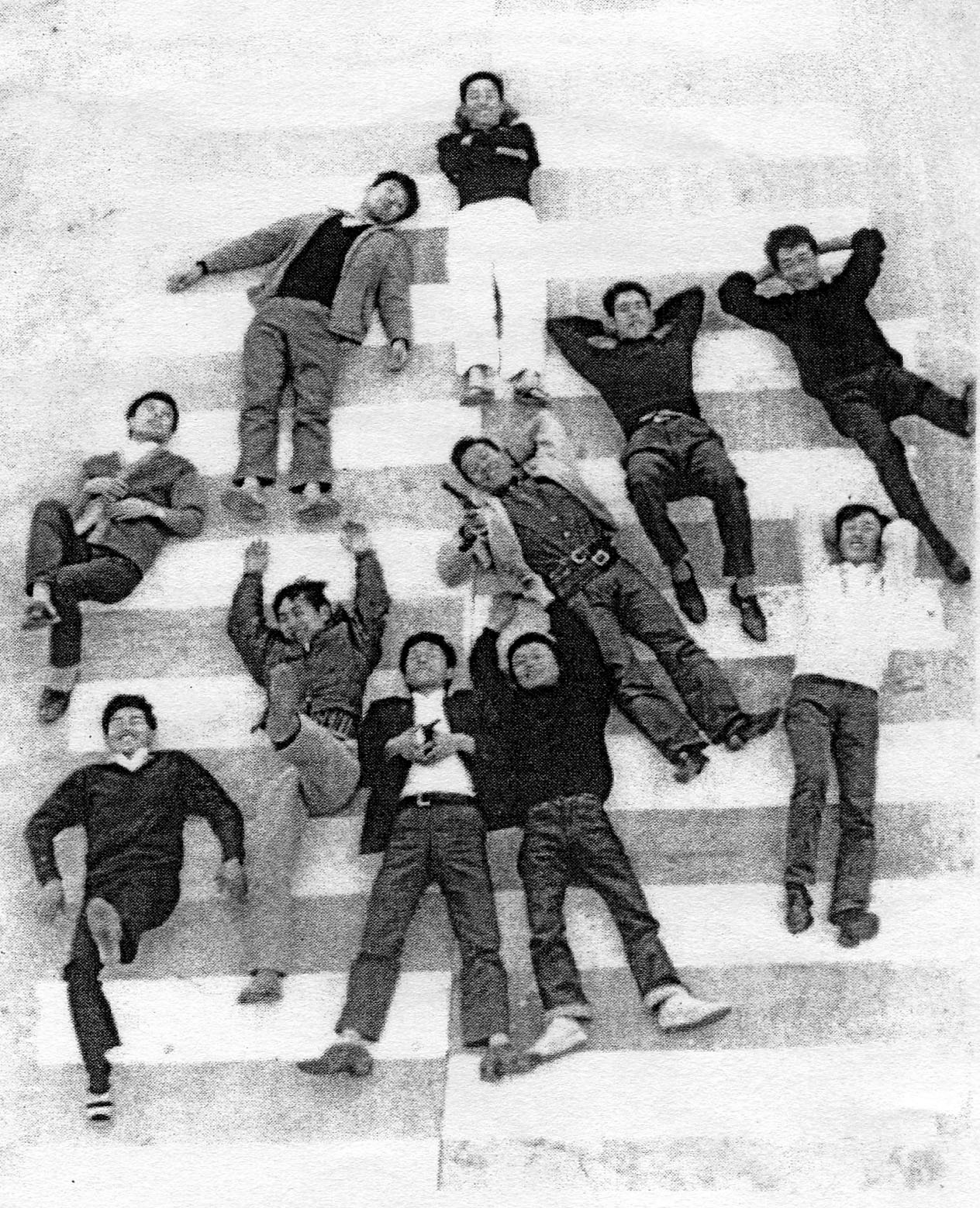
The project that started after Saiyuki was Anju and Zushiomaru (1961).
In animation, the allocation of scenes begins with deciding who will handle the lead characters. One of the two great masters — Mr. Daikuhara or Mr. Mori — would always take the leads, and then the other important characters would be assigned through discussions between the director and the sub-chiefs.
Mr. Kumakawa and Mr. Furusawa handled the remaining characters. My immediate superior was the second-in-command, Oda Katsuya — we called him “Odakacchan” — but since the original key animation, or rather the layouts, were drawn by Mr. Kumakawa, I ended up working closely with him and often visited his home.
Mr. Kumakawa was a gentle, mild-mannered man, and his wife was equally kind — and exceptionally good at making cream puffs. I lost count of how many times I was treated to them.
On the job, he mostly handled water effects — making water and waves move, what we’d now call effects animation. But he was the animator who had created the adorable movements of the ladybug in The Spider and the Tulip, so he really should have been given more cute animal work. That’s what I always thought.
Studying Effects
During this period, I would go to the Tama River to study the movement of water. I’d drop large stones straight down from above the surface and sketch the resulting motion, or throw smaller stones at various angles to observe how the water reacted. Some days I’d spend the entire day doing nothing else.
I worried I might run out of stones on the riverbank, but after repeating the exercise many times, I began to perceive even the split-second moments of movement. I was feeling rather like Leonardo da Vinci when a man who had been watching me from the bridge came over, walking his bicycle. “Something troubling you? I’m happy to listen — just say the word.” “I’m fine for now, thanks!” I said. “Don’t go doing anything rash, okay?” “I won’t!”
I believe this was the period when I studied the most during my entire time at Toei. When I was at the studio, I’d spend about two hours doing my work in the animation production section, then wander over to the neighboring background art section to watch them paint. Background art back then was done in poster colors, and it still is today.
Having grown up in a family that ran a movie theater, I knew my way around poster colors to some degree. But here, there were first-rate painters with advanced techniques all gathered in one place. Years later, when the anime boom arrived, many people who had come out of Toei went on to become leaders in the field. That’s a piece of history worth noting.
My restless feet — or rather, my light feet — didn’t stop there. Next came the camera department on the first floor. My attitude was that I ought to go introduce myself to the people who were shooting my animation. Things were a bit awkward at first, as they always are, but it didn’t take long to settle in. Once I was comfortable, the next step was offering to help out.
The chief cameraman, Mr. Sakura, and Mr. Yamaura later transferred to Mushi Production. After Mushi Pro went bankrupt, Mr. Yamaura went on to help found Sunrise and eventually became its third president. Bun-chan — Shinozaki Fumio — who shot my The Mouse’s Wedding, and Suga-chan later went separate ways: Bun-chan joined the camera department at TBS Television, while Sugawara Hideaki moved to Tohokushinsha, a major commercial production company.
The next place I frequented was the editing department. I say “department,” but at the time there wasn’t even an assistant — it was just Mr. Inaba Yuzo, working all by himself. The thing about editing is that there’s no work until a finished product comes in, so if you’re only working on feature films, there must be plenty of idle time. Still, a one-person workspace is hard to intrude upon, and someone who works alone (though the communication with the director must be intense) has little social interaction, so jokes and banter don’t come easily. Even so, after barging in a couple of times, Mr. Inaba’s attitude gradually softened.
When I mentioned that I’d worked as a projectionist at our family’s rural movie theater and that splicing broken positive film was second nature to me, his demeanor changed completely. He started chatting freely about handling negative film, how to scrape emulsion, synchronizing sound negatives — all sorts of things that proved invaluable later on.
Years later, when I went freelance, I bought a Bolex 16mm camera and did the shooting and editing for most of my independent films entirely by myself. I want to put on record that this was possible solely thanks to what I learned during my time at Toei Animation. Toei Animation possessed all the know-how necessary for animation that no university in the country could offer. For me, it was a magnificent university and a theme park rolled into one.
In those days, Toei Animation had what we called “busy seasons” and “off-seasons” — terms borrowed from farming, since in Japan rice can only be harvested once a year. It described the gap when one production had finished and the next wasn’t fully ready, leaving animators with nothing to do. This must have been a headache for management. A young man in the planning department, Mr. Hara Toru, took advantage of these lulls by proposing short film projects, and his proposals were approved. Toei had an educational film division that primarily sold films to schools. Incidentally, today’s TV Asahi was formerly called NET — Nippon Educational Television — a broadcasting station that Toei itself had established.
Mogura no Motoro and The Mouse’s Wedding
Mr. Hara from the planning department recruited the brilliant young director Mr. Ikeda Hiroshi — also a co-founder of Studio Ghibli — and developed an original screenplay for Mogura no Motoro (“Motoro the Mole,” 1961). He assembled a handpicked team of about eight animators, led by Nagasawa Makoto, along with Hikone Norio, Kodama Takao, Yokoi Saburo, and others. Even after that, there must have been fifty or so people still without work.
One day, Mr. Shirakawa Daisaku from Toei’s head office planning department came by and asked me, “Tsuki-san, don’t you have any project ideas?”
“You spring that on me out of nowhere — how about The Mouse’s Wedding?” I said.
“You drew that massive storyboard for Saiyuki. Surely you can manage a storyboard for a mouse story?” said Shirakawa.
“Give me until tomorrow, then,” I said.
The next day: “The storyboard’s done. Take a look, Daisaku-san.” “Already?! That’s impressive,” said Shirakawa.
That evening: “Tsuki-san, it’s been approved. Let’s put a team together.” And so it was decided. I asked Mr. Koyama Reiji to handle the background art, and about a month and a half behind Mogura no Motoro, The Mouse’s Wedding got underway.
The mouse team started later than the mole team, but we finished in two months — the mouse came in first. That’s how it went.
After the film was completed, Mr. Akagawa Koichi, the head of the educational film division on the first floor, came up personally to congratulate us.
Who Created Toei Animation?
After I began working at universities, I was often invited to give speeches at Chinese universities. A question that students frequently ask is whether Japanese animation began with Tezuka Osamu. I answer that Toei made the first Japanese feature-length animation, The Tale of the White Serpent. Then they ask who created Toei. I tell them it was the capitalist Okawa Hiroshi. Then they ask what his motivation was — what inspired Toei to start making animation in the first place. I realized I needed to look into this, and as I investigated, it gradually became clear that the key person was none other than Mr. Akagawa Koichi, whom I mentioned earlier. I want to set down here what I’ve been able to learn so far.
Around this time, Master Tezuka was steadily working on establishing his production company and assembling staff for his debut work, Tales of a Street Corner (1962). Meanwhile, Toei Animation had Arabian Nights: The Adventures of Sindbad (1963), based on work by Tezuka Osamu and Kita Morio, and I was doing a great deal of work for both studios.
The Birth of Wolf Boy Ken
When Astro Boy began production and broadcasting in 1963, the anime boom exploded overnight, as evidenced by its sky-high 30% viewership ratings. Every commercial broadcaster scrambled to acquire anime content, and NET — Toei’s affiliated network — was hounding Toei Animation with relentless demands. But while Toei Animation was the established elder of Japanese animation, it was a complete novice at television production. There was no way they could give immediate answers about schedules and quality standards.
Both of the chief animators, Mr. Daikuhara and Mr. Mori, flatly refused to take on the project. “Mushi Production can do it, so there’s no reason Toei can’t” — that was apparently the view of Executive Managing Director Togami. When asked who else might be capable, the name that came up was mine. I learned this from Mr. Daikuhara himself, after he had left Toei Animation and started his own studio called Carpenter.
After that, I was summoned by the executive managing director. “Tsukioka, do you have any project ideas you’d like to pursue?” he asked. “I haven’t given it any thought whatsoever,” I said. “How about something in science fiction?” he pressed. “If I can make something I actually want to make, I’ll give it a try,” I said. “Then come up with something,” he said. “Give me three days,” I said. “Fine. I’m counting on you.”
I spent one night thinking. I was already well aware that the Astro Boy boom was in full swing and every studio was frantically searching for science fiction content. Being the contrarian that I am, I thought about going in the exact opposite direction.
What emerged was the jungle genre — specifically, a wolf boy. And his name was Ken. Once the image crystallized, the work came fast. By the next day, the image storyboard was done. A full day ahead of my promised deadline, on the second day, I went before the executive managing director — though I knew perfectly well that the decision wasn’t his to make.
The storyboard would most likely be shopped around to advertising agencies and presented to sponsors. If the sponsors gave the green light, everything was a go. The decision came quickly, but there was one hurdle: they wanted a pilot film, and they were giving me two minutes’ worth of footage to work with. No problem, I thought, and dove into the key animation and in-betweens by myself, while asking animator Kodama Takao to handle the background art. In about two weeks, I had a 45-second pilot. It made the rounds and got approved quickly too — I imagine the other side wanted content as soon as possible and wasn’t about to quibble. That pilot film ended up being used as-is for the opening sequence.
For the television version of Astro Boy, my master had made it standard practice to go straight to storyboards without a screenplay, so for Wolf Boy Ken as well, we followed the Astro Boy approach and started without scripts for roughly the first three episodes. What I was aiming for, though, was the Bugs Bunny series from Warner Bros. I set up Ken at the center, surrounded by his wolf pack family and three jungle villains — a gorilla, a bear, and a tiger. The jungle was an imaginary one: not South America, not Africa, not Asia. The guiding principle was that even when there were battles, there would absolutely never be any killing. My goal was to wrap things up with gags whenever possible.
The Argument at Kobayashi Asei’s House
The first order of business was recording the opening music, which meant deciding on a composer. I recommended Kobayashi Asei, who at the time was making a name for himself with commercial jingles. I had the producer get in touch, and we headed to Mr. Kobayashi’s house to request an energetic composition for the theme music.
On that day, it was me; Mr. Hatano, who had been installed as the project coordinator after the Wolf Boy Ken series was confirmed; and Mr. Miyazaki, who had been sent over from NET as their representative. The three of us made our way to the Kobayashi residence in Nakano Ward.
I explained the concept of the show to Mr. Kobayashi, and we asked him for a lively, spirited opening theme.
Mr. Kobayashi asked whether there would be a vocal song, and what about the lyrics.
“No vocals,” I said.
Mr. Miyazaki, who had been silent until then, spoke up: “We’d really like a song.”
“As the network, we absolutely want a song,” Mr. Miyazaki declared.
I explained that I wanted to go with the Astro Boy style.
The Astro Boy opening, with its up-tempo march, had real impact.
This became a back-and-forth that went nowhere. It was a matter of taste and personal opinion, but his invocation of “as the network…” — that kind of authority-pulling — got under my skin, and I couldn’t back down.
Things apparently escalated to the point where it seemed like we might come to blows. Mr. Kobayashi, a big man, wedged himself between me and Mr. Miyazaki on the long sofa and said, “Gentlemen, let’s both cool our heads and talk this over again later.” His words cut through the tension and settled the matter for the time being.
That same day, I headed straight to Master Tezuka’s house to ask for his opinion.
My master said, “You really should put a song in, Tsuki-san.”
“I made a mistake with my opening,” he said. “I should have included a song.” Those words from my master hit home.
I immediately called Mr. Miyazaki, apologized for my stubbornness, and announced that we would include a vocal.
Almost instantly, I received a summons from Toei Animation’s president, Mr. Yoshida.
When I went to his office, Mr. Yoshida greeted me with a beaming smile.
(Mr. Yoshida was Yoshida Shin, who had served as the chairman of the Japan Record Awards jury since around 1959. Before the war, he had been a popular song lyricist.)
“I have a protégé in lyric writing — let me introduce you to a certain young man. He has wonderful talent. Would you let him write the theme song for your show?”
President Yoshida had already called the young man in.
“Of course — we were just about to commission lyrics, so I’d be happy to see his work,” I said.
The young man was very young and personable, so I explained the concept of the show to him, and my expectations for the result grew.
Four days later, the young man came to the studio with his lyrics. The producer and I sat down with him and took the work. Unfortunately, it wasn’t what we had hoped for.
Rather than matching our concept, the lyrics were full of love and longing — essentially enka ballad lyrics. I sensed this was going to be difficult, but the producer avoided making any judgment. We deferred the decision and asked the young man to leave the lyrics with us.
Feeling it was my responsibility, I tried writing out what the concept called for in my own words. But I hesitated to show this to the lyricist directly, so I first consulted with Director Serikawa and others in the directing department. Their opinion was that my own word-sketch should just be used as-is.
We had Mr. Kobayashi look at both sets of lyrics without revealing who had written what. I believe that when Mr. Kobayashi saw the two options side by side, there was no way he would have chosen the other one. My word-sketch was adopted as it was, and Mr. Kobayashi used it as the basis for his composition.
Of course, I went to the president’s office, explained how things had unfolded, and apologized for not being able to meet Mr. Yoshida’s expectations. President Yoshida said, “I see, I see. That’s a shame, but it can’t be helped,” and the matter was settled for the time being.
My friendship with the young lyricist continued afterward. Fifteen years later, we worked together on an NHK Minna no Uta segment called Suteki na Birthday (“A Wonderful Birthday”), credited as: lyrics by Ishizaka Masao, animation by Tsukioka Sadao.
For the theme song recording session, I also invited Director Serikawa, who had by then become a close friend, to participate.
Utae yo Ken — Sing, Ken!
Sakebe yo Ken — Shout, Ken!
Oyoge yo Ken — Swim, Ken!
Janpu da Ken — Jump, Ken!
The shout of “Keeen!” appended after each verb was Serikawa’s idea. The dramatic “JAAANG!” sound effect at the moment the Wolf Boy Ken title appears on screen was also Serikawa’s idea. These may seem like minor suggestions, but they elevated the dynamism of the opening to another level entirely. He was a true benefactor in that regard.
As a postscript: half a year after Wolf Boy Ken began airing, the Astro Boy opening finally got a vocal song too.
Lyrics by Tanikawa Shuntaro, composed by Takai Tatsuo — the Astro Boy theme song.
Casting the Voice Actors
The most contentious point in the voice casting was the lead role. From the very beginning, I wanted to use an actual boy. But Mr. Miyazaki and virtually everyone else involved were opposed. The reason was simple: boys go through voice changes — it’s a biological inevitability. Historically, all voice actors for boy characters had been women, and that hasn’t changed since.
But I still wanted a real boy. I reasoned that if the series contract was for four quarters — one year — we could probably avoid the voice-change problem. I cast Nishimoto Yuji from the Toei Children’s Theater Company as Ken, and I believe the result was a success.
That said, by the final stretch, there was no denying that his voice had started to sound a bit more grown-up.
I heard talk of continuing the series a couple of times, but Nishimoto’s voice change became the stumbling block, and the series didn’t continue. If only we’d had AI back then…
In those days, the precedent set by Astro Boy held that a TV series needed a stock of five episodes — at minimum three — completed before the first broadcast.
But the animation staff for Wolf Boy Ken numbered only about nine people.
Despite this, Wolf Boy Ken went on the air with only two episodes in stock.
The planning department, which handled negotiations, may have assumed that if push came to shove, they could reassign staff from the feature film team and manage somehow.
But the production coordinators were in dire straits. It was the kind of situation where everyone seemed on the verge of developing stomach ulcers.
One day, the executive managing director summoned me.
“Tsukioka, I have a proposition. Can you produce one episode a month by yourself — key animation and in-betweens? We can get writers for the stories, and we can bring in any number of assistant directors from the live-action studio for directing. But we absolutely need you as part of the animation workforce.”
“Fine, but then let me work from home.”
“No objection.”
I myself had grown a bit weary of wringing stories out of an empty head and routinely churning out the same kinds of shot compositions.
So I accepted the arrangement without any particular resistance.
And so I shifted to a new mode: creating animation exclusively from other people’s storyboards.
However, ever since the Astro Boy TV series had begun airing, I had been drawing roughly a quarter to a third of each Astro Boy episode, so this too became an enormous workload.
The thing about animation is that ideas for movement come to you while you’re drawing. Gags suggest themselves too.
That’s the “play” in the work — the place where an animator shows what they can do.
It’s a way of thinking that’s close to jazz.
That’s exactly where the fun and humor of the Bugs Bunny series comes from.
But when you’re working under constant time pressure, all that extra play has to be sealed away.
Work without play isn’t good for anyone.
Serikawa’s Misfortune
Do young people today know the expression jitensha sogyo — “bicycle operation”?
A bicycle is a vehicle that only moves as long as a person is pedaling.
Stop pedaling and it falls over. In other words: you’re out.
A TV series works the same way. If you don’t make it to broadcast, you’re out.
The network demands damages, or the company goes bankrupt — that’s the kind of world it is.
As a business, you simply cannot afford to miss a broadcast slot.
That was the absolute imperative.
Serikawa once assembled an entire episode using nothing but existing cuts from the footage bank. That’s the kind of tough operator he was.
He kept the broadcast slot filled and effectively saved the series, so from the company’s perspective, it was worthy of commendation.
In other words, he was doing what we’d now call AI-like work, well ahead of his time.
Calling up existing cuts one by one based on the storyboard, stringing them together.
Much of that kind of work can already be done by AI alone.
You could say Serikawa was running the proof-of-concept experiment more than half a century ago. I titled this section “Serikawa’s Misfortune,” but depending on your perspective, some might see it as a stroke of good fortune.
About Akagawa Koichi
I didn’t learn that Mr. Akagawa was the person who planned Toei Animation’s debut feature, The Tale of the White Serpent, until about fifteen years after I had left the company. His name, Akagawa Koichi, does appear in the credits, but unless you have a particular reason to look, most people don’t check that closely.
As I mentioned earlier, the first work I directed at Toei Animation was The Mouse’s Wedding, and since the completed film was distributed through the educational film division, Mr. Akagawa came up to offer his congratulations. That was when I first met him properly.
Searching my distant memory, I realize I had actually encountered Mr. Akagawa once or twice before that. It was when I was in the staff room drawing storyboards for Saiyuki — he had come by with Mr. Kondaibo Goro to observe.
Mr. Kondaibo, with his unusual name, was affiliated with Toei’s head office and was credited as the planner for Saiyuki. He was a well-built man and a good conversationalist, whereas Mr. Akagawa was reserved and a man of few words.
When I began investigating what had originally motivated the establishment of Toei Animation, I started reading books about Amakasu Masahiko — and Mr. Kondaibo’s name kept turning up. I deeply wish my curiosity had begun ten or twenty years earlier.
The Story of Ryu-RON
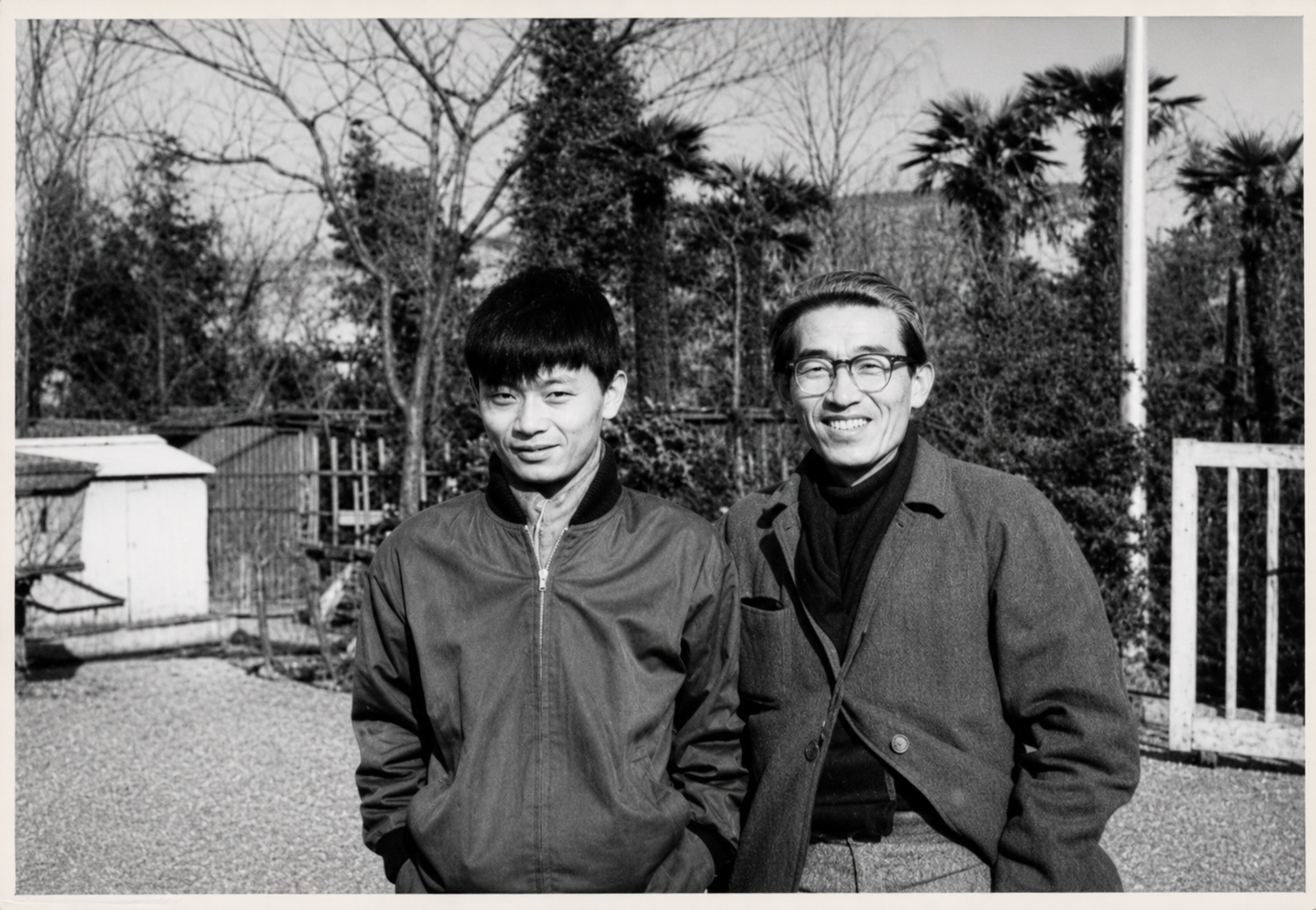
Fast-forward to around 1990. I received a call from Mr. Tsuchiya Shintaro, who was serving as head of the president’s office at Bandai. He said there was an interesting book he wanted me to read. What arrived was Ryu-RON by Murakami Motoka. Forty-two volumes in paperback.
“Wait — I have to read all of this?” was my first reaction. But as I flipped through the pages, I was gradually drawn in, and I finished the entire series in two or three days.
Mr. Tsuchiya wanted to know whether it could be adapted into animation. I told him it was tremendously interesting but not suited for an animated drama — it was definitely cinematic material, but the scale was too large for any current film production company to handle.
The entire second half of the story is set in Shanghai and Jilin Province, China. The scenery was so realistic that I wondered whether the author had done location scouting — because I recognized buildings and landscapes from my own memory. And the story takes you inside the Manchuria Film Association.
The protagonist’s lover becomes a movie star there. The props, studio settings, and camera equipment — I believe it even included Mitchell cameras, the cutting-edge equipment of that era. I found myself wondering: who on earth is this author, Murakami?
What was even more fascinating was his individualistic portrayal of the characters.
His depiction of Amakasu Masahiko, of Zhou Enlai and Deng Xiaoping — and then there was a shadowy male figure who appeared as a spy, drawn to look exactly like Mr. Togami, the executive managing director at Toei Animation (whose first name escapes me).
Mr. Togami stood nearly 180 centimeters tall, was handsome but had a piercing gaze. Rumors circulated that he had been involved in espionage in China, and people at the company feared him. In truth, he was a deeply compassionate person — I knew that firsthand. In the manga Ryu, the character is treated in much the same way.
Amakasu Masahiko (1939) was himself rumored to be a spymaster — a special operations agent for the Kwantung Army — and in later years served as chairman of the Manchuria Film Association.
This means the author, Murakami, must have had extensive knowledge of the Manchuria Film Association. I heard through publishing circles that Murakami’s uncle had worked as an art cameraman at Manchuria Film, and that he had lent the author all the still photographs he had taken during that era, which became reference material for the manga.
According to numerous books, when Japan lost the Pacific War, Amakasu Masahiko took his own life. Two people were present at his death: one was the film director Uchida Tomu, and the other was Akagawa Koichi.
Uchida — the man who had wanted to animate The Tale of the Bamboo Cutter — and Akagawa Koichi, who was in Toei Animation’s educational film division and planned The Tale of the White Serpent. Why were these two men there?
Director Uchida is famous for Straits of Hunger (based on Matsumoto Seicho’s novel), but personally, I adored Bloody Spear at Mount Fuji (1955). That film had the cooperation of directors who represented the very best of Japanese cinema: Ito Daisuke, Ozu Yasujiro, Mizoguchi Kenji, Shimizu Hiroshi, among others.
Beyond their connection to animation, I also wanted to know whether the China connection between Uchida and Akagawa was mere coincidence, so I dug through the records. What links these two men is Amakasu Masahiko. My recent knowledge of Amakasu came initially from the manga Ryu-RON, but I’ve since read Captain Amakasu by Hosaka Masayasu and Fujiwara Sakuya, The Hidden History of Manchuria by Ota Naoki, Captain Amakasu by Tsunoda Fusako, and Amakasu Masahiko: Madness in the Wilderness by Sano Shinichi — Sato Makoto has also written extensively on Amakasu. In addition, there is The Biography of Uchida Tomu by Suzuki Naoyuki, and the official Toei Animation company history, in which Akagawa Koichi himself contributed a column on about three occasions. There is also a multi-page dialogue in a weekly magazine between Okawa Hiroshi and the economic commentator Obase Toshie, but much of the animation information Okawa discusses appears to be based on research compiled by Akagawa. At the time, information about the German filmmaker Lotte Reiniger, for instance, was nowhere to be found in film magazines — but it was in Akagawa’s research files.
The depth of knowledge about world animation contained in those files exceeded even what the animation department possessed.
Many histories of anime trace the story from Okawa Hiroshi’s motivation and proceed to discuss Imada Tomonori, but that is primarily because the people who demonstrated management prowess were Imada and Okada. The initial motivation to make animation, I believe, came from Akagawa. That is my assessment.
A Bar in Shinjuku
My last university posting was near the Shinjuku West Exit overpass, along Ome Kaido avenue. About fifteen meters from the back entrance, you reach Otakibashi-dori street. Along the way, there’s a stylish building with, on its second floor, a drinking establishment that seems completely at odds with its surroundings. Apparently, the bar had been there before the building went up, so it had priority rights and was relocated to the second floor. But since it operated as a lunch spot during the day, I was a regular customer. On the wall hung a small oil painting, about thirty centimeters square, that also seemed out of place in a bar. “Did you paint this?” I asked the owner. The painting depicted Sakurajima volcano, sitting there with imposing grandeur. There was a vocational school called Harada Gakuin near Sakurajima that I had commuted to for about five years, so the volcano held deep memories for me.
“No, this painting was a gift from a customer named Mr. Akagawa,” he said.
“Hmm,” I said.
“Mr. Akagawa Koichi said he’d received it from someone or other himself.”
“Wait — did you say Akagawa Koichi?” I said.
“The one from the film company?”
“That’s right. Do you know him?”
“Mr. Akagawa’s friends, so-and-so and so-and-so, used to be evening regulars here. They were very loyal customers,” he said.
From that starting point, the bar owner told me a great deal about Mr. Akagawa and Uchida Tomu.
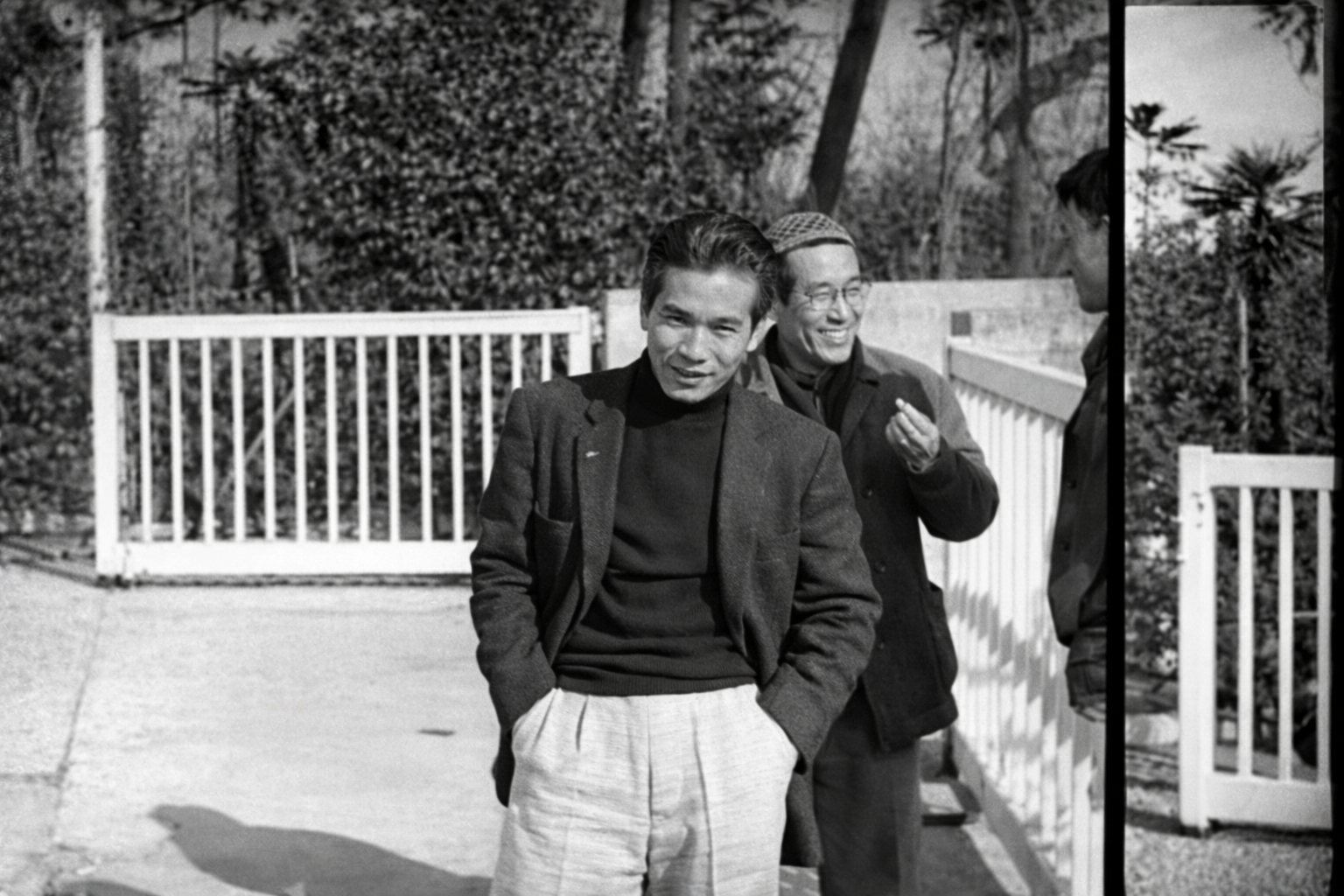
In China, Akagawa had not been with the Manchuria Film Association — he had been with the South Manchuria Railway. Like Manchuria Film, the South Manchuria Railway served Japan’s national policy, but Okawa’s role at the railway was apparently that of an economic research investigator.
Meanwhile, during the same period, Akagawa was working in the educational film section within the South Manchuria Railway.
His work seems to have been something between newsreels and documentaries, shot with a 16mm camera. Across the vast Chinese mainland, movie theaters existed only in parts of Shanghai and Hong Kong at that time.
Mr. Akagawa and his assistant would load a projector onto a donkey and travel through the countryside. At night, they would hang a white cloth screen and show films. In other words, he was shooting his own footage and running his own exhibition circuit.
Meanwhile, in Shanghai, Chinese film companies — Diantong Film Company and Xinhua Film Company — were actively operating, and there must have been a competitive dynamic of sorts with Manchuria Film and the South Manchuria Railway’s educational film section.
In 1941, the Wan Brothers produced Princess Iron Fan — the first feature-length animated film in Chinese and Asian history, based on Journey to the West. It must have been an enormous hit, to use modern parlance. Out in the provinces, leisurely documentaries couldn’t possibly have competed with Journey to the West.
Akagawa must have experienced this firsthand. And Director Uchida may well have seen it too. The Tale of the White Serpent would not be made until sixteen years after Princess Iron Fan.
As an aside — around this same period, the director Ozu Yasujiro watched Disney’s Fantasia in Hawaii and reportedly said, “We’re going to lose this war” — referring to the Pacific War. That story has become legend.
Be that as it may, I learned that Hashimoto Kiyoshi, the art director on the White Serpent production staff, was still alive. He too had come from the Manchuria Film group to work at Toei Animation, and had later moved to NET, so tracking down his whereabouts was straightforward. I called him right away to ask about Akagawa. “He was a close friend — ask me anything,” came the welcome reply, and I headed to his home. But all he showed me were two or three photographs of himself with Mr. Akagawa. As for the information I actually wanted, there was almost nothing to be gained.
I also interviewed Mr. Tomari, the most senior surviving former president of Toei Animation, but he had come up through the Oizumi film studio as a director, so he didn’t even know about the period when I had been there.
In 2022, Ms. Kishi Fumiko published The Secret History of Manchuria Film (with Ishii Taeko as interviewer). Ms. Kishi was Manchuria Film’s sole film editor. I managed to contact her nephew, Mr. Chikura, and asked him to relay my questions, but once again, there was nothing to be learned about Akagawa. Incidentally, Mr. Chikura was also the person who had served as the episode editor for Wolf Boy Ken.
With Japan’s declaration of surrender, most of those affiliated with the South Manchuria Railway and Manchuria Film returned home. But among the Manchuria Film group, Director Uchida Tomu, Mochinaga Tadahito, and several dozen others remained behind. The harrowing experiences that awaited them are detailed in Ms. Kishi’s The Secret History of Manchuria Film. Several years later, a considerable number of them were able to return to Japan.
Interestingly enough, I recall reading that Toei took in everyone returning from China — right-wing and left-wing alike.
In that sense, you begin to understand what a large-hearted man Okawa Hiroshi, the founder of Toei, truly was. Not just anyone could have done that. And from this same Mr. Okawa, I received commendations on several occasions. Unfortunately, they were not for my professional work. They were at the company field day.
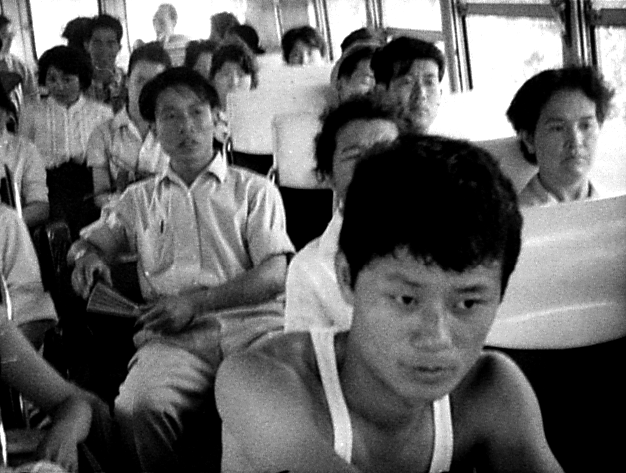
During my time at Toei, the company held an annual athletic meet. Everyone experiences field days at school, but a company holding one was something I’d never heard of — yet Toei had one. In fact, while tracing Akagawa’s footsteps in my research, I discovered that the Manchuria Film Association also had an athletic meet. Whether there’s a connection, I can’t say, but some Chinese universities also have athletic meets as an institutional tradition. I haven’t investigated whether all of them do.
Toei had a head office organization handling theatrical distribution, an organization for film production, and an organization for animated films. If you gathered all the personnel together, there must have been several thousand employees.
Behind the rows of production studios was a large athletic field, and at the meet, the entire Toei workforce would converge there. That said, attendance was voluntary, so people who didn’t like sports simply didn’t show up.
Every employee received tickets entitling them to participate in two events. Being an athletic person, I collected the tickets of those who didn’t want to participate and entered five or six events. I won first place in most of them. The first-place prizes were lavish, and only the winner received anything. By my third award ceremony, the jury chairman — Mr. Okawa — apparently remembered my face. “You again, lad?” he called out.
His phrasing — chimi ka instead of kimi ka — was a hallmark of the Niigata dialect, where the ki sound shifts to chi.
One More Athletic Meet
During my time at Toei, there was an incident known as a lockout. The word means to shut out, to bar entry. When the conflict between the company and the labor union becomes irreconcilable, the company locks the gates and the employees can no longer work.
One morning I arrived at work to find the company gates locked and no way in. The area in front of the gates was already crowded with employees who had come earlier. The company had initiated a lockout, they said.
“Well, let’s just go home then,” I said, but that wasn’t allowed. Three union executives were still inside, trapped in the union office within the company grounds. The rest of us had to demonstrate our willingness to work, or it would cause problems later. And so, until the company opened the gates, every employee had to come here each day and show their intent to work. It was the third day of this tedious routine — huddling around bonfires in the cold late-autumn air and shouting slogans at the company. Meanwhile, inside the firmly locked gates, company managers took turns making rounds, and from time to time, we could see what appeared to be riot police among them.
The wives of the three union executives came each day bearing their husbands’ lunches and changes of underwear, but the company wouldn’t open the gates and showed no sign of accepting the deliveries.
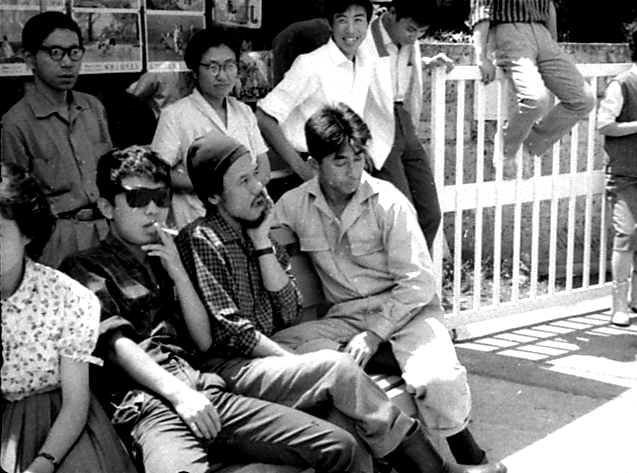
The studio grounds were surrounded by a 2.5-meter mesh fence topped with barbed wire, making entry no easy feat. But the three executives — Nagasawa, Ikuno, and Azuma — had gone without food for three days. The union leaders outside devised a plan to deliver food and clean underwear. The distance from the fence to the union office was about eight meters. They quietly asked for volunteers to make the delivery. No one stepped forward. When they decided to simply pick someone, the name that came up, as usual, was Tsukioka.
“Am I the expendable one here?” I grumbled.
The union’s thoughtful provisions were as follows: leather gloves, since the barbed wire posed a risk of injury; a guarantee that the union would cover legal fees if I were caught and charged with trespassing; and their prayers for my safe return.
On the inside of the fence, conifer-like trees — something like Blue Junipers — were planted at 1.5-meter intervals. The tree closest to the gate was the largest, with branches providing cover, so the plan was to climb the fence there, hidden behind the tree, and enter the grounds undetected. Meanwhile, the union members would gather on the opposite side of the gate and sing “The Internationale” in full chorus to draw management’s attention — a diversionary tactic. Next, the bundled lunches and underwear wrapped in furoshiki cloth would be tossed over the fence. Once I caught them, I was to sprint to the union office and throw them in, then take the shortest route back over the fence and out. That was the scenario. I had to admire it — being an animation studio and all, they could craft realistic scenarios and not just fantasies.
Without further debate, I went into action immediately. My shirt snagged on the barbed wire and I heard it tear, but the infiltration was successful. The furoshiki bundles came sailing over right away. Without a moment’s pause, I charged toward the union office. This was before sneakers existed, so I was wearing leather shoes.
The moment I started running, my footsteps clattered loudly on the concrete. Managers and police who had been lurking in the shadows of buildings half-emerged, eyes wide with alarm. The three executives, seeing what was happening, cranked open their ground-level iron-framed windows as wide as they could. I hurled the bundles through the windows and immediately bolted for the nearest section of fence. The security team, snapping out of their surprise, gave chase. I grabbed the fence with both hands, but someone seized my foot. I apparently kicked at that hand several times (my memory of this part is hazy, but I seem to have kicked), and when the grip released, I scrambled to the top. With the help of union members waiting on the other side, I landed safely. It appears I caused minor scrapes to one hand of a manager named Murayama.
When the lockout was resolved and things returned to normal, I ran into Mr. Murayama. He threatened me: the company had photographic evidence of my trespass, and combined with the injury to a company employee, I could be sent to the holding cell. But apparently my face wasn’t visible in the photos, and the injury wasn’t serious enough to warrant prosecution. In the end, no action was taken.
This was my championship victory at the fourth great athletic meet of my Toei years. I would have loved to hear Mr. Okawa say “You again, lad?” one more time, but no such words came.