Limited animation means, as the word says, animation that is restricted. The opposite of “limited” is “full” animation — animation with no restrictions.
The thinking behind full animation goes like this: an animal has a heart, and its lungs are breathing, so something is always in motion; even when it seems to be standing perfectly still, some part of it is moving — and on that premise you keep something moving. Limited animation, on the other hand, rests on a different ground: since it was a drawing to begin with, there is no need to move anything unless the movement means something.
In our own age, 99.9 percent of anime and film are media for telling stories, but the genre that shows pure imagery — the kind seen since the days of experimental film — has been carried on through such things as the music video. Within this current, animation moved from a Disney-style naturalism, through a search for stylization, to the emergence of limited animation. And this was not unrelated to the arrival of the medium of television.
The epicenter of limited animation was Los Angeles, California.
- Stephen Bosustow (1911–1981) One of the founders of UPA (United Productions of America). Producer. The “McBoing Boing” series, the “Mr. Magoo” series, and others.
- Chuck Jones (1912–2002) Producer, director, animator. The “Looney Tunes,” “Merrie Melodies,” and “Bugs Bunny” series.
- John Hubley (1914–1977) Design work on “Snow White,” “Pinocchio,” “Fantasia,” “Bambi,” and others; after going independent he won numerous Academy Awards for short films.
- Hanna-Barbera Productions, “William Hanna & Joseph Barbera” (1957–2001) The “Tom and Jerry” series.
The limited animation represented by UPA was a great counterattack against the way animation had until then evolved in a vertical direction.
Lavish animation achieved by pouring in an enormous number of drawings and personnel — that is the direction of vertical evolution, like making, to borrow from games, something on the order of FF (Final Fantasy) or Metal Gear Solid. (This is John’s comment, and part of his criticism of our own Japanimation.)
What was it that they, UPA, were aiming for? The conditions television imposed — shortened schedules and low production costs — were no different in America than in Japan.
What UPA left behind, as I see it, lies in two-dimensional design and the stylization of movement (in other words, direction).
There was a work that became the very source of that epicenter: “Rooty Toot Toot” (UPA, 1951), a short animation. By John Hubley (one of UPA’s founding members). It is based on the famous American murder ballad (folk song) “Frankie and Johnny.” Betrayed by her lover Johnny, Frankie shoots him dead and is put on trial — a black comedy. It is an adult animation drawn with plenty of humor.
Infidelity, adultery, jealousy, a shooting, a trial. It was a singular animation that included each character’s testimony and the ironies of the justice system. In our own country it would be Akutagawa Ryūnosuke’s “In a Grove,” which in turn became “Rashōmon,” the theme — of truth and fact — taken up by Kurosawa Akira (screenplay by Hashimoto Shinobu).
Let me stray a little from the path here. It is something I wrote about in the third installment of this blog. I made Nippon Television’s “Computopia” as an animation, and the words I had its producer Ushiyama Jun’ichi say — “There’s no end to how many truths there are” — come back to me. Against the main theme that “since it is Computopia, if this were realized what a wonderful world it would be,” I drew one facet (the truth as I see it) — that if something wonderful happens, an equivalent measure of negativity is bound to arise — and I was fired for it. AI has only just appeared, but even now, despite Japan’s corporate earnings being at unprecedented heights, the truth that university students continue to struggle to find work is a fact not to be overlooked, and that there will no longer be enough jobs to match the population going forward should be regarded as one of the side effects of AI’s arrival. So much for this detour into the question of truth and fact.
“Rooty Toot Toot” (UPA, 1951) is one of the representative works in the history of limited animation, and one of its completions — its peaks. Limited animation tends to be thought of as merely a technique of omitting movement, but of “Rooty Toot Toot” and a few others, that cannot be said. In the sheer quantity of movement it does not reach Disney. But in its character design and background art, and in the sharpness of its direction, it had opened up an entirely different horizon. This work is one such case; and if you watch, say, “Toot, Whistle, Plunk and Boom” or “Mars and Beyond,” made by Ward Kimball — who was on staff at Disney and had absorbed the influence of limited animation — you can see clearly that it is not merely a matter of leaving things out. The composition, the color, the character design, and even the acting were not simply stylized; they held movement of the kind that says, “full animation can be like this too.” In other words, these were works that pursued not the goal of “moving little,” but of “how to show it.” In Japan “Rooty Toot Toot” in particular was a work that was hardly ever introduced, but it is content you cannot bypass if you are going to speak of limited animation.
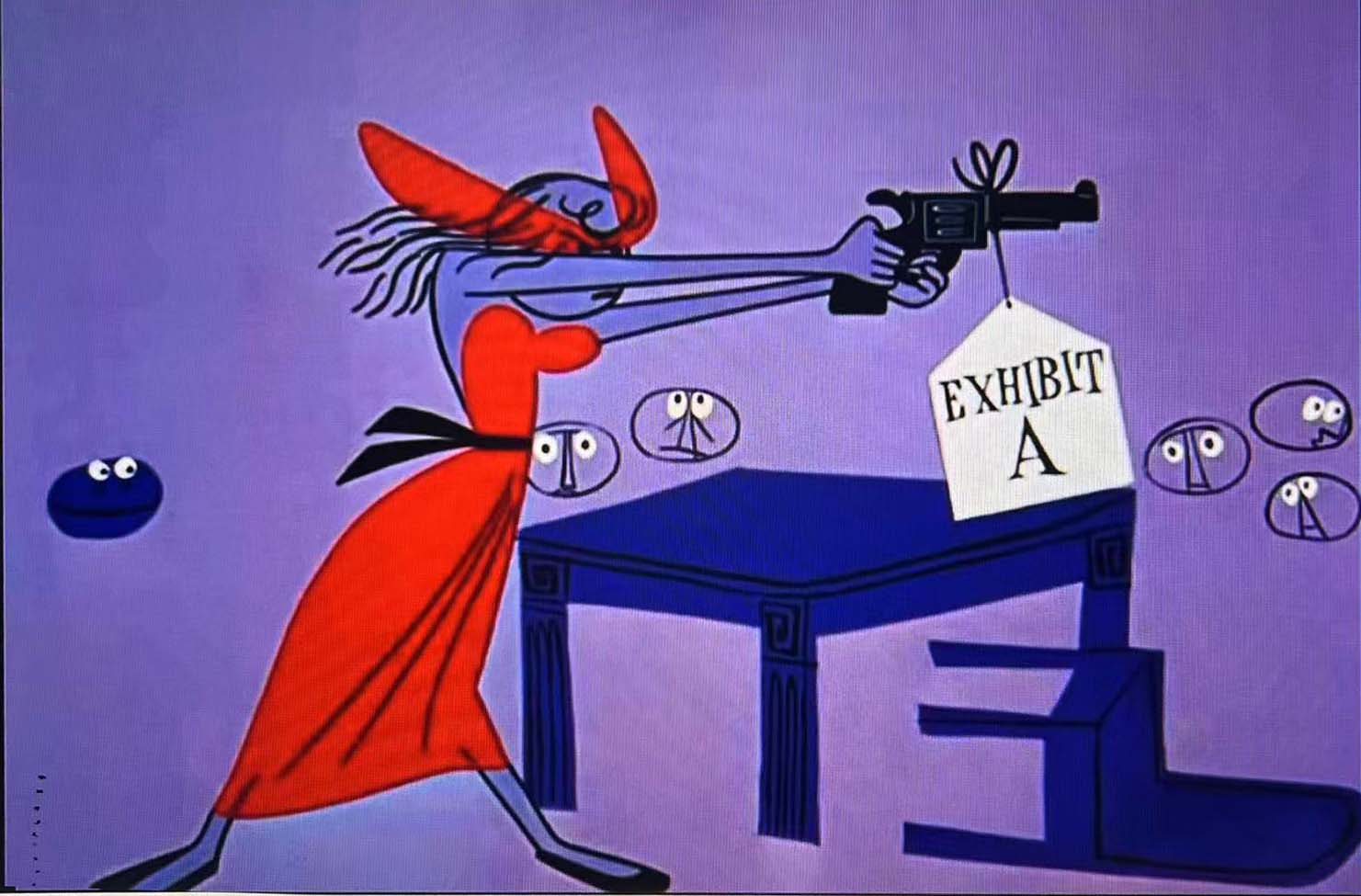
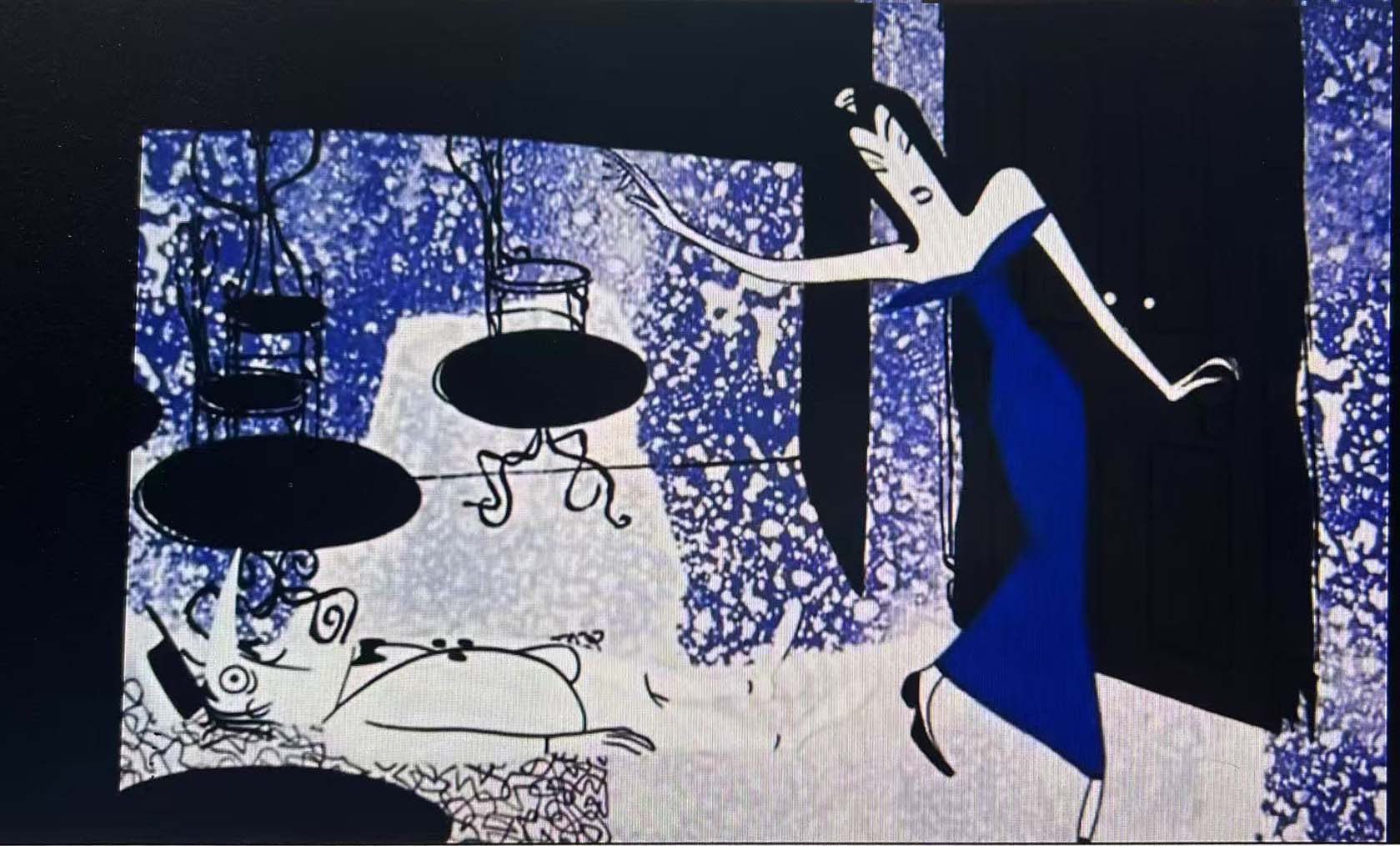
UPA works.
- The “Gerald McBoing-Boing” series (1951)
- The “Mr. Magoo” series
In the later Magoo series there is “1001 Arabian Nights” (directed by Jack Kinney, a feature-length theatrical film, 1959). Of the two series through which UPA’s limited animation caused a sensation in the animation world, the feature “1001 Arabian Nights” (1959) went into decline amid the film’s failure both artistically and commercially. The cause of that failure, I think, lay in the stylization of movement and in the reality of its storytelling. That is, a feature meant for theaters is not something one goes to see over and over, so the meaning of stylization does not sit well; and once it becomes a feature, the reality of the characters demands still higher technique. Rising to take its place was our own limited animation — the thing given the ironic name of Japanimation.
In the 1960s an undertaking began at the Sōgetsu Hall to introduce foreign “experimental films,” and limited animation was introduced among them; perhaps because of the appeal of its character design, designers all over the world leapt at animation. In Japan too there was a course of events in which the manga artist Kuri Yōji, the illustrator Manabe Hiroshi, the graphic designer Yanagihara Ryōhei, and also younger designers such as Wada Makoto and Yokoo Tadanori — many designers — turned a strong interest toward it. In the 1970s it spread even to the socialist-bloc countries of Europe, and it permeated every country except China and Russia.
Mr. Kuri launched the animation “Group of Three (Sannin no Kai)” and would hold a presentation every year, but there is a quantitative limit to what one can make alone, so he called out to various manga artists and designers to take part.
A strong call was also made to Tezuka Osamu, who at the time was already working on “Tales of a Street Corner.” Around then I myself, while still on the staff of Toei, was helping with Master Tezuka’s “Tales of a Street Corner.”
“Tales of a Street Corner” was, in its character design, made with limited animation fully in mind, but in the animation itself the consciousness of stylization was thin; the two or three cuts that ought to move, let’s do in full animation — that was how Master Tezuka thought about it. Accordingly, “Tales of a Street Corner” was not in the category of experimental film; he wanted to screen it in ordinary movie theaters, and it was in fact shown at some theaters.
The Style of Design
When you design a character, you draw while imagining a solid form that holds no contradictions from any angle; but in UPA’s case, a drawing only had to be interesting as a picture.
It did not need to be a solid form; it was, so to speak, graphic design using straight lines and curves — a modernist design using a minimum of lines. The backgrounds too were something you might call abstract painting.
The influence of these UPA limited works was tremendous. Disney’s ace, Ward Kimball (1914–2002), while following the style of the limited method, still won an Academy Award for the short “Toot, Whistle, Plunk and Boom” (1953), a CinemaScope-size theatrical piece.
Even before that, Kimball had incorporated the limited method: “Man and the Moon” (1955) and “Mars and Beyond” (1957) were splendid even if you set aside the concept of television limited animation. The latter two were broadcast in an age when there was no color television, so I never knew whether they were color works, and to this day I still do not.
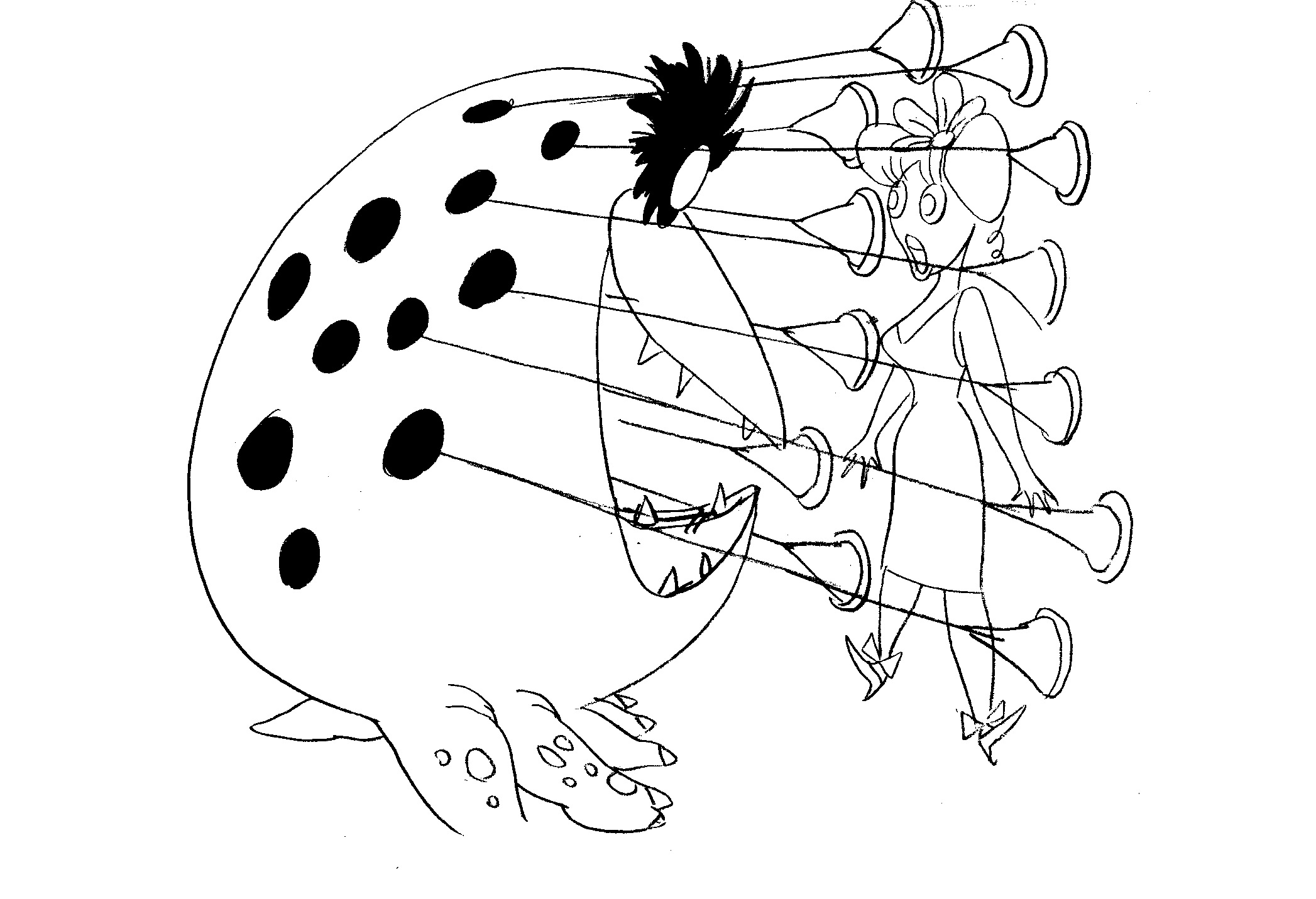
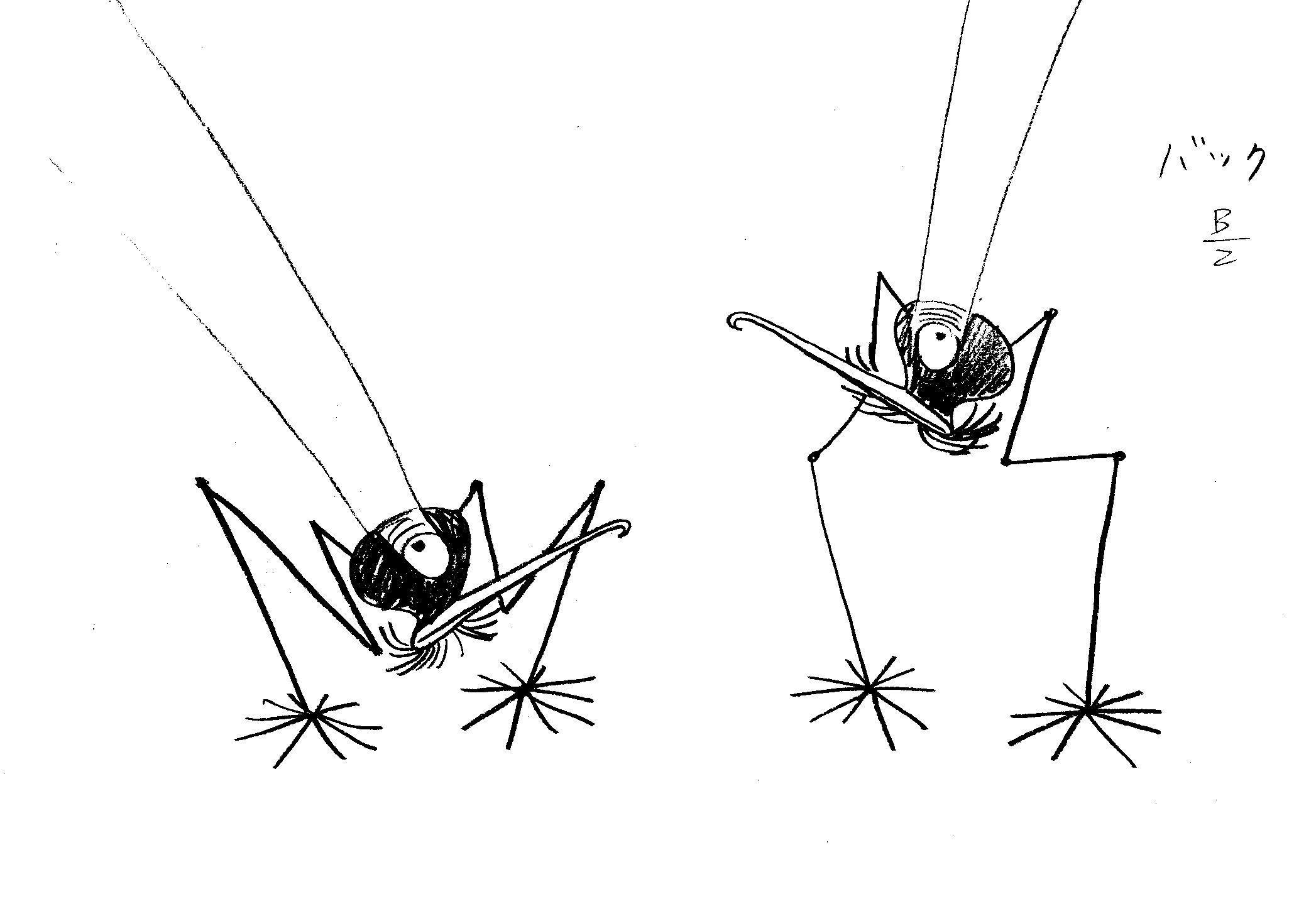
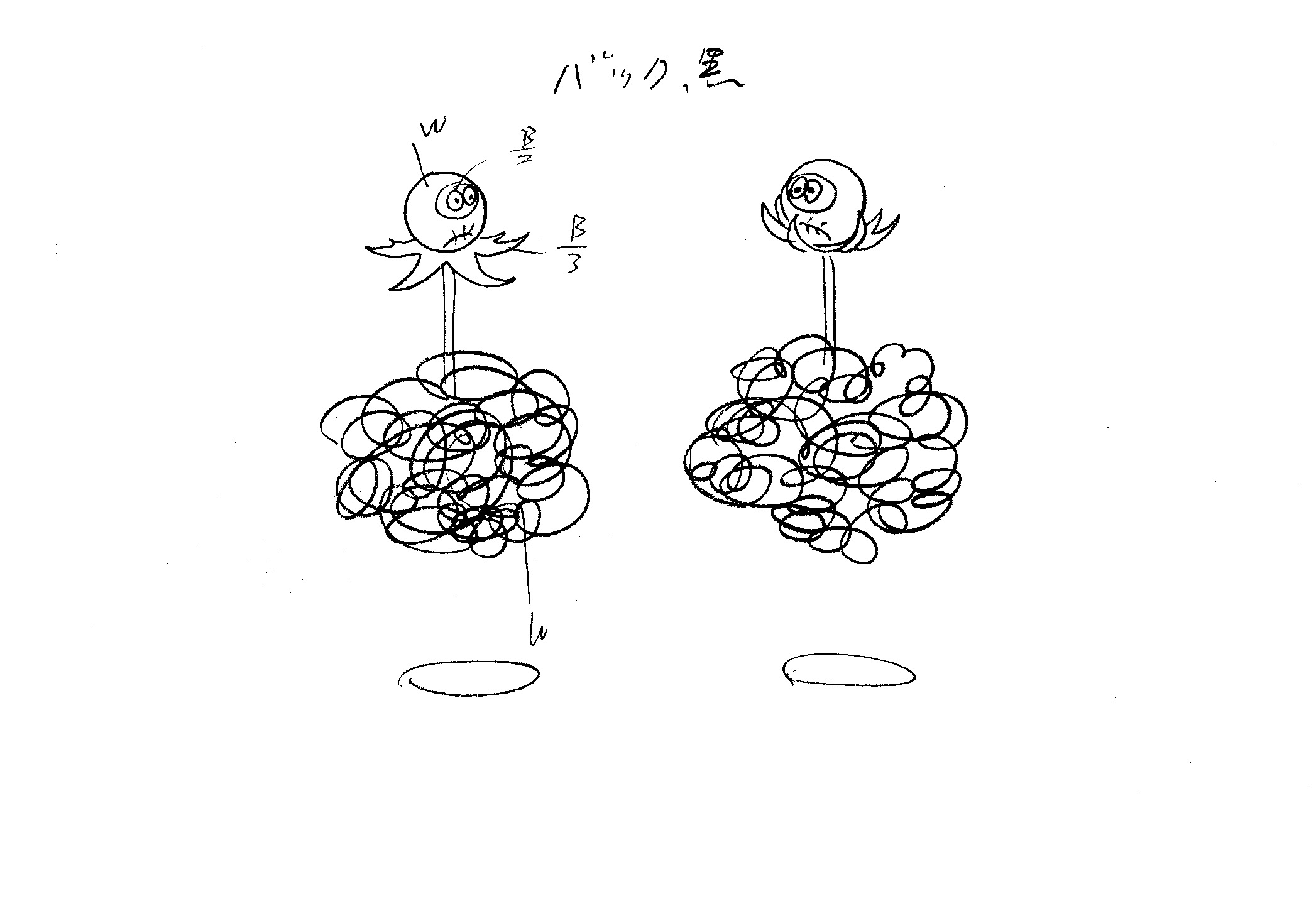
『About fifty years ago, an American magazine called “LIFE” ran a spread with some twelve images from “Rooty Toot Toot,” and I have kept it. I have pasted a few of them here; but to show all of them there is the problem of copyright, so I regret I cannot. I would be glad if those interested would look for them on social media as well. As for Kimball’s “Mars and Beyond,” I have about twenty sketches that I myself drew, so I will paste in four or five here to introduce them. I would also like those who are interested to look for the originals on social media — though I am searching too, and “Man and the Moon” and “Mars and Beyond” are ones I simply cannot find.』
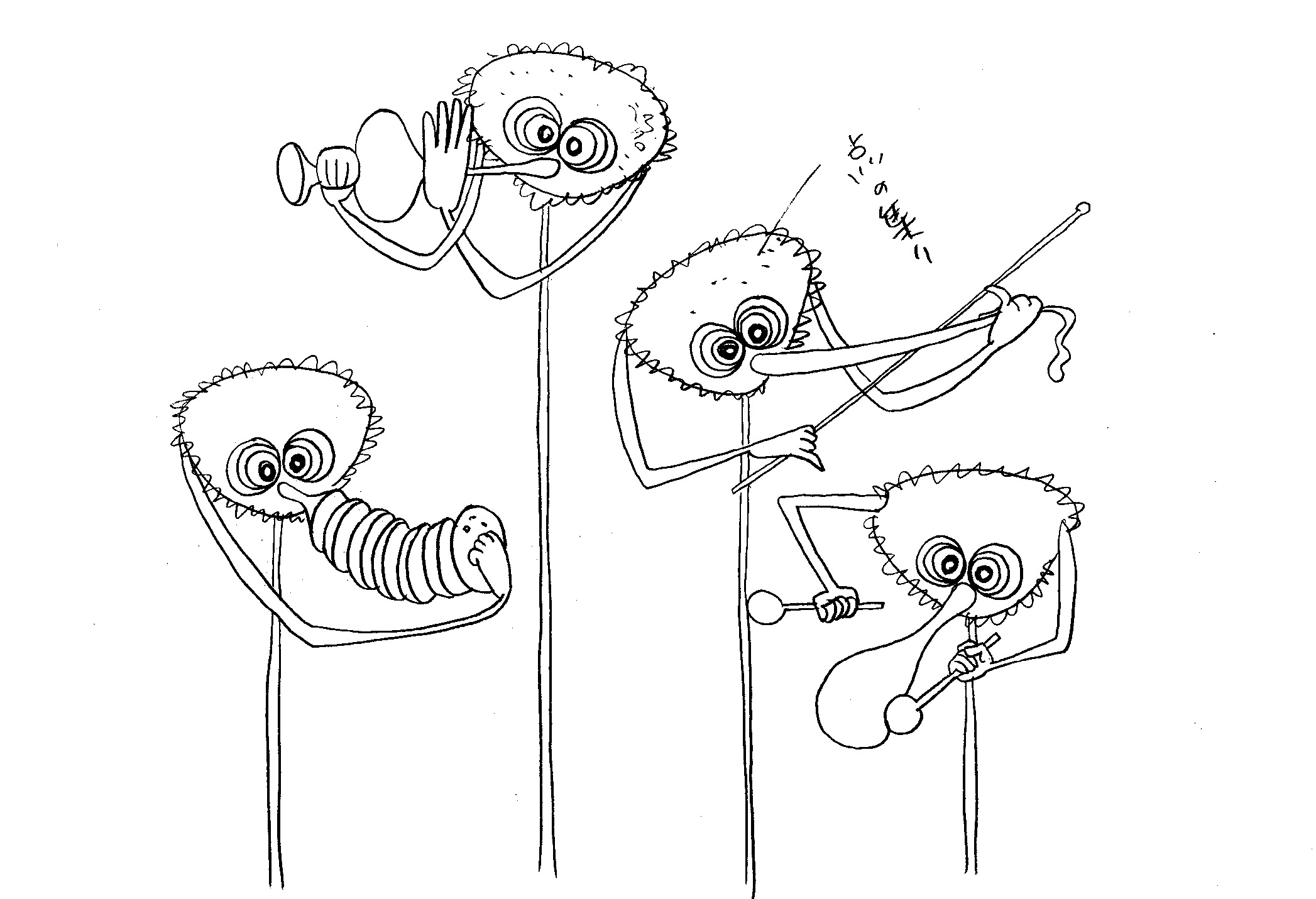
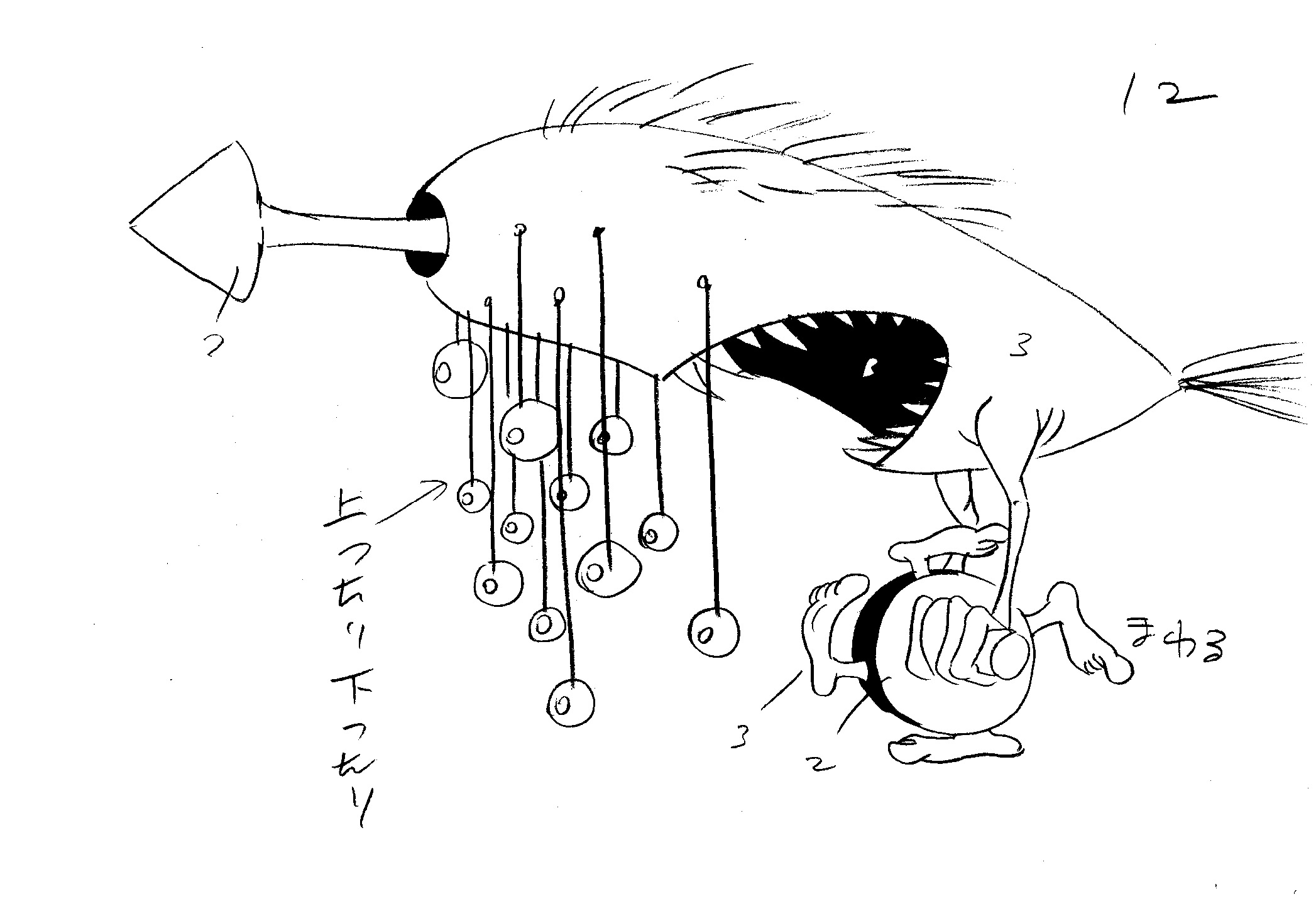
The Style and Patterns of Movement
Some say that “style” is a difficult word. But if I say that style is pattern, you will understand. In the theater and stage arts of our country there are Kabuki and Noh. In China there is Peking opera.
In these plays the makeup, the costumes, and the ways of moving are patterns. Striking a pose (mie), stamping the feet (tatara wo fumu), the “flying six directions” (tobi roppō) — right down to the ways of walking and running, these are distinctive patterns, movements agreed upon with the audience.
In film, if you want to show space you can show as much of it as you like, but a play or stage performance is limited by the size of the stage, so if a character runs at tremendous speed they vanish into the wings in an instant. If the audience is even having a little bit of conversation, a character could be gone before they know it. And so, even when leaving the stage in a hurry, a style of movement was created in which one departs slowly, taking time.
Even Mickey Mouse, before he starts to run, has this movement: he throws out both elbows, spins his feet round and round in the direction of travel, and then dashes off in two or three frames.
“Tom and Jerry” and the like have the same movement. Even so, it is a pattern of movement that some animator created; and although America is strict about copyright, it seems there is no copyright on movement, so everyone uses this. This too is a pattern, a movement that can be called a style. Restriction, constraint — these are also the source from which new movement, or something new, is born.
To strike a pose in time with a sound effect is, in film terms, the same effect as the technique of the close-up.
I think it was the same for Kabuki and for sumo: in the old days the spectator seats were partitioned off by bamboo railings into sections of about one tsubo each, and these are called masu-seki (box seats). It seems there was a system of reserving box seats by the year.
Box seats also served for socializing and for combining business, and food and drink were served there; the box seat was also a social venue, and not everyone sat facing the stage in earnest. Since the host and the guests of a box seat faced one another, at the climax of a play they would turn their gaze — along with a booming announcement of sound — toward the one who had struck a pose, and let out a shout of encouragement. That was the style. All of these styles are surely things born out of some constraint.
The limited animation born in California may have been the only artistic style to bloom in America in the brief span of 1951 to 1959. Just as Japan’s traditional performing arts receive several billion yen in subsidies every year, I think America ought to have found a way to preserve it somehow; but given the circumstances of the medium, it probably could not be helped, and I cannot help regretting it.
Next time I would like to write under the title “The Turning Point of Limited Animation and Japanimation.”
It’s already July.
From Anime Otaku to Anime Production
There was a time when my master called me over and said, “Tsuki, won’t you make some short animation?” and “I’ll produce it, so make something.” Well, here too it probably had the flavor of a proxy participation on my master’s behalf, as in Journey to the West.
At the time I was an anime otaku, but I did not hold any concrete desire to create something in particular. Still, I knew that the tendency in the West carried the influence of UPA’s early limited animation and the current of experimental film, and I also knew as news that in England John Halas had stepped into a field that could hardly be called for children, with “Animal Farm” (full animation).
What emerged after much thought was the labor union problem at the company Toei. There was a story (a fact) that the company Toei had a strange rule whereby the executives of the labor union would become section chiefs and then department heads. “What on earth is that?” became my theme, and with my master’s consent I began the storyboards.
I titled it “Cigarettes and Ashes.” That was because I had been given a vivid impression by a Polish film with the Japanese title “Ashes and Diamonds” (1958, directed by Andrzej Wajda), so the title “Cigarettes and Ashes” was a play on words made with respect. A year later, as a self-produced work, I made an ultra-short animation called “New Genesis (60 seconds)” (1969); someone recommended that since there was a “Short Film Festival” in Kraków, Poland, I ought to submit it, so I did, and to my complete surprise I was given the Grand Prize (1969) — and whether by coincidence or by miracle, the head of the jury turned out to be the very Andrzej Wajda whom I so respected.
Short films have a standard — a maximum of 30 minutes or less. At the time I was making a lot of commercials, and Japanese commercials max out at 60 seconds, with 15-second versions being 90 percent. So all commercial prints are wound onto a 16mm reel (7 cm in diameter, one minute maximum). I too sent mine on this reel when I submitted to the festival.
At the Grand Prize announcement, Mr. Wajda, up on stage, said, “This year’s Grand Prize is this work!” and, like a magician, pulled the reel of my film out of his pocket with thumb and forefinger and held it up. The hall, I’m told, roared with laughter.
That said, since I never imagined I could receive an award, I was not there in person. This is a story I heard from a student who was studying in Poland. The next year I hurried to attend the festival, but the director happened to be abroad and it did not work out — I could not meet him, which is a story of the deepest regret.
But when I asked how it could be that the director would go abroad during the festival period, given that it is Poland’s only international film festival, I learned that it was a characteristic of this Kraków Short Film Festival: that the same jurors cannot serve twice, and that until the very day the judging is announced, who is doing the judging is not made public — these, I was told, are its features. Incidentally, among past jurors, two Japanese — Mr. Satō Tadao and Ms. Kawakita Kashiko — are said to have served. I see; which means, one could infer, that at other competitions it is the country’s celebrities and important figures who occupy the key posts of the jury.
Master Tezuka’s produced work “Cigarettes and Ashes” was screened within the current of experimental-film screenings at the Sōgetsu Hall in Minato Ward, Tokyo. I was let in among people from many and varied fields — manga artists, designers, illustrators — and I have the very happy memory of being taken up in a comment in the pamphlet by the designer Kamekura Yūsaku, who at the time had handled the poster design for the Tokyo Olympics.
I had heard, however, that with the bankruptcy of Mushi Pro the prints were scattered and lost; but in recent years the negative was found and I received a DVD copy of it from Mr. Shimizu of Tezuka Productions. I was well aware that it does not fall into the genre of experimental film, and that it does not even carry the influence of limited animation.
Having written this far, I noticed that the production years of my own works had gotten all muddled in my head, so I thought I would sort them out and looked them up on Wikipedia and elsewhere — only to notice that even there it does not seem to be very accurate.
The animation I made under the influence of limited animation was “The Mouse’s Wedding” at Toei Animation (around 1962), which ought to be my debut work. Since this was a work I made around the time production of “Anju and Zushiōmaru” (1961) had finished and “The Adventures of Sinbad” (1962) was beginning, it ought to be around that year — but Wikipedia gives 1979. “New Genesis” is 1969, and “Ken the Wolf Boy” is 1965, so I think “Cigarettes and Ashes” is from before that, around 1964.
On the way back from Poland’s “Kraków Short Film Festival,” conveniently enough, I stopped by the Annecy Animation Festival in France, and I took part there too, carrying two works, “New Genesis” and “The Color of the Sal Blossoms.” There, works that had been submitted to competitions other than Annecy were deemed ineligible, and formal entry into the competition was not permitted, but they did let me have a screening.
What made me happy here was being invited to a party and meeting — or rather, being introduced one by one to — famous creators such as Paul Grimault, and François Laguionie, and, of all people, Alexandre Alexeïeff. The labor of introduction was Mr. Grimault’s, and Mr. Grimault in particular gave me the delightful assessment that “your work resembles neither Disney nor anyone else.”
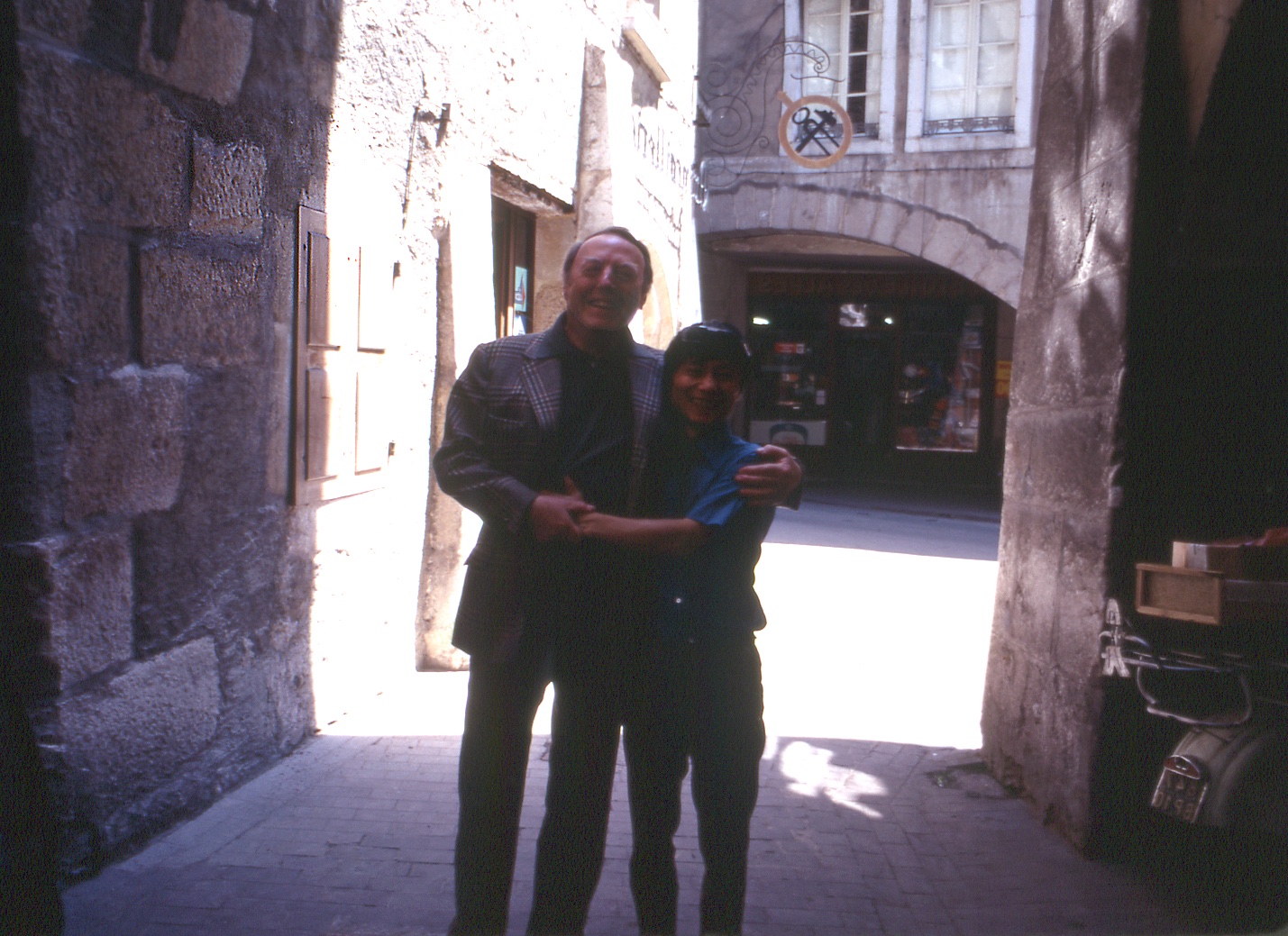
Soon after entering Annecy, the first person I met was a magazine editor named Max Tessier, who could speak a little broken Japanese. He asked me, “What do you think of the director Ōshima Nagisa,” who was called the standard-bearer of the New Wave. Thinking, “who on earth is this guy,” I answered, “I’m not interested.” But this young, Japan-loving editor came to Japan often thereafter and became a man with whom I had a long acquaintance; before I knew it he had become a director or producer of the Cannes Film Festival, and the last time I met him was on a visit to Japan to invite director Kurosawa Akira to receive a special award at Cannes. I say “last” because I learned, from an email from my friend Mr. Claude Vurlong, that he seems to have passed away last year. And that Mr. Claude, too, was a Canadian I met at this festival — a beginner in Japanese, a writer and critic, with the Japanese name “Kurōdo (Vurlong).” Since Mr. Tessier was single, to this day I have been left not knowing to whom I ought to send a telegram of condolence.
Mr. Grimault invited me, “Once the festival is over, won’t you come to my atelier in Paris?” and with Mr. Claude as interpreter I headed straight for the Grimault studio. It was a beautiful studio, but what surprised me was the camera used to shoot the animation. He used an old camera called a Filmo, the kind that would be displayed in a museum, and a homemade shooting stand assembled from angle iron sold at the hardware store.
Japan’s shooting stands around the same time were of the five-panel split, left-right up-down sliding type, and the camera was of the up-down handle, track type; the camera was a Mitchell, and at Toei Animation and Mushi Pro everything was the same. Seeing this, I was taught that no matter how old the camera or the camera stand might be, if the images you produce are wonderful there is no problem whatsoever. After returning to Japan I bought a Bolex camera and bought angle iron and assembled a stand, and I have shot my own animation entirely by myself.
Mr. Grimault gave me the grateful offer of whether I would work in France, and said he would even cover my tuition at the Athénée Français for half a year; but the conclusion I reached after careful deliberation was to decline.
People ask me why. In that era, the 1970s, Japan’s air pollution and the like were advancing, but there was a plus-and-minus heat, a potential you could not put into words, brimming over. Compared with that, Europe had stability and abundance, but I could not feel that there, and for one aiming to make things I worried about becoming a rootless drifter and losing my sensitivity.